35% off on product page · save $8.61
Vet-Recommended Cat Harnesses: What to Look For
Veterinarians generally recommend a well-fitted, adjustable cat harness rather than one particular brand. A harness should distribute pressure across the chest instead of the neck, allow your cat to move normally, and remain secure when your cat backs up. Because cats vary in shape and tolerance, fit matters more than a “vet-approved” label.

Vest-style harnesses offer broad coverage, while H-style harnesses use lighter, narrower straps. Neither style is best for every cat: the right choice stays in place without rubbing the armpits or restricting the shoulders. Look for adjustable straps, sturdy closures, and a leash attachment positioned on the back.
Featured in this guide
How to Travel with a Cat in the Car – A Complete eBook Guide for Stress-Free Road Trips with Your Feline Companion
Follow the manufacturer’s sizing chart and measure your cat’s chest girth at its widest point, just behind the front legs. Once the harness is fastened, you should be able to fit about two fingers beneath it without leaving enough slack for your cat to slip a leg through. Recheck the fit as kittens grow or your cat’s weight changes.
1
Choose the restraint size for the dog and vehicle position
2
Attach the restraint to the approved vehicle anchor point
3
Check the restraint tension before the vehicle moves
4
Introduce the dog to the restraint during the vet recommended check
Let your cat investigate the harness, then put it on briefly indoors and offer treats or play. Increase wear time only while your cat remains comfortable; freezing, frantic rolling, or repeated attempts to escape mean it is time to slow down. Practice with a leash in a secure room before trying a quiet outdoor area.
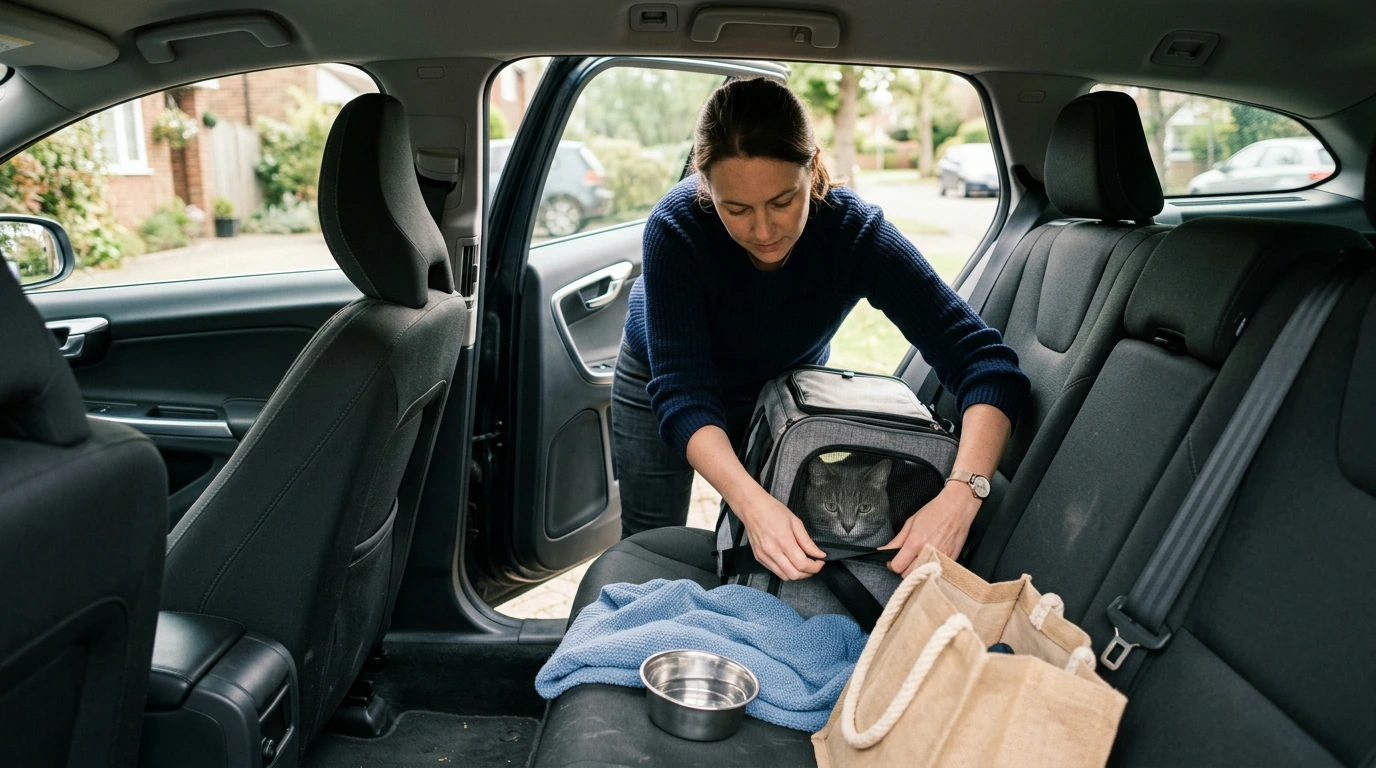
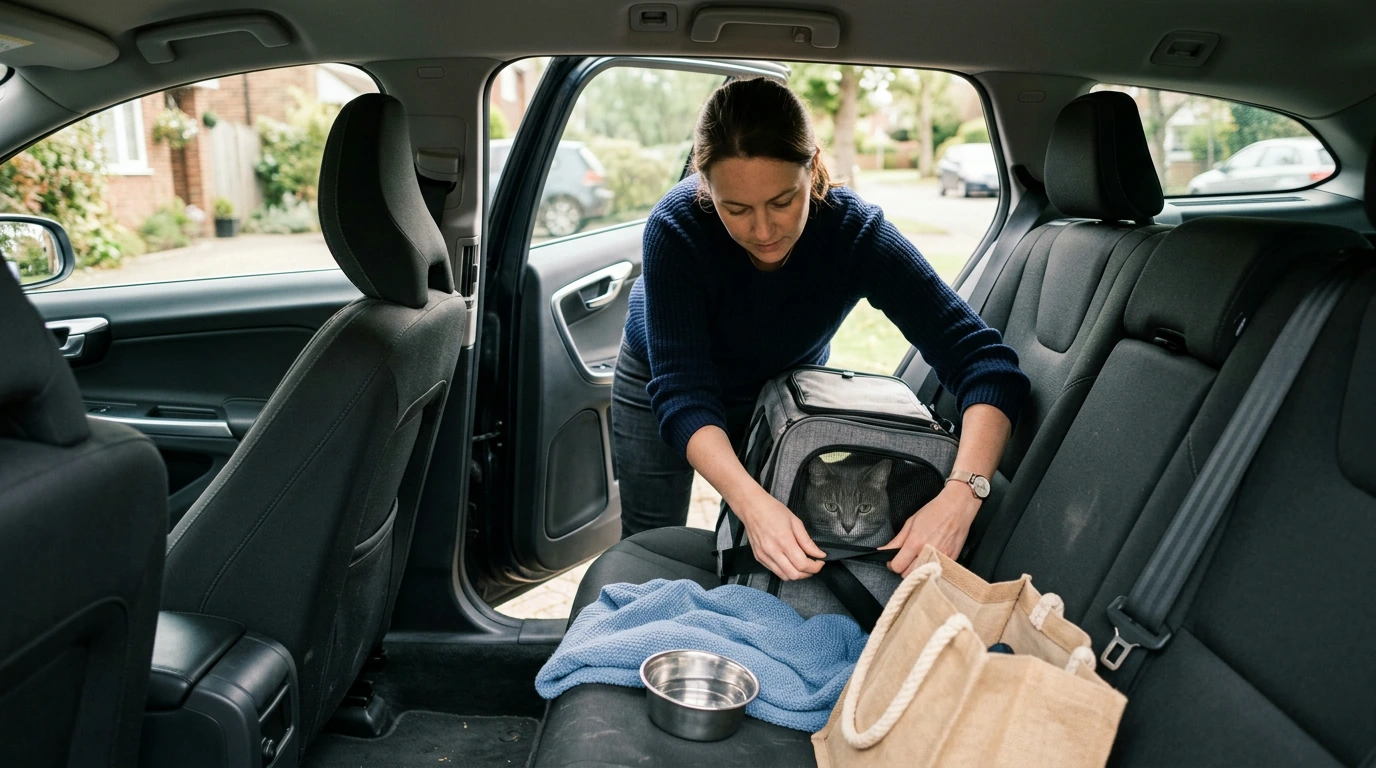
A harness can help you maintain control during a supervised stop, but it does not replace a secured carrier in a moving vehicle. Keep your cat contained before opening a car door, and attach the leash before lifting them out. For more trip-planning advice, see our guide to traveling with a cat in the car.
Many veterinarians support a properly fitted harness for supervised leash training and outdoor time. They generally advise introducing it slowly and never leaving a cat unattended while wearing one.
The safest option is one that fits your individual cat securely without restricting movement or causing friction. Test it indoors and check that your cat cannot back out of it before going outside.
Preferences vary: some cats tolerate a lightweight H-style harness, while others do better with the coverage of a vest. Watch how your cat walks and behaves rather than choosing by style alone.
A sling is not a substitute for a secured carrier during car travel. Ask your veterinarian whether one is appropriate for your cat, especially if they have an injury or mobility condition.










Leave a comment