35% off on product page · save $8.61
How to Travel With a Cat in the Car: A Calmer Road-Trip Plan
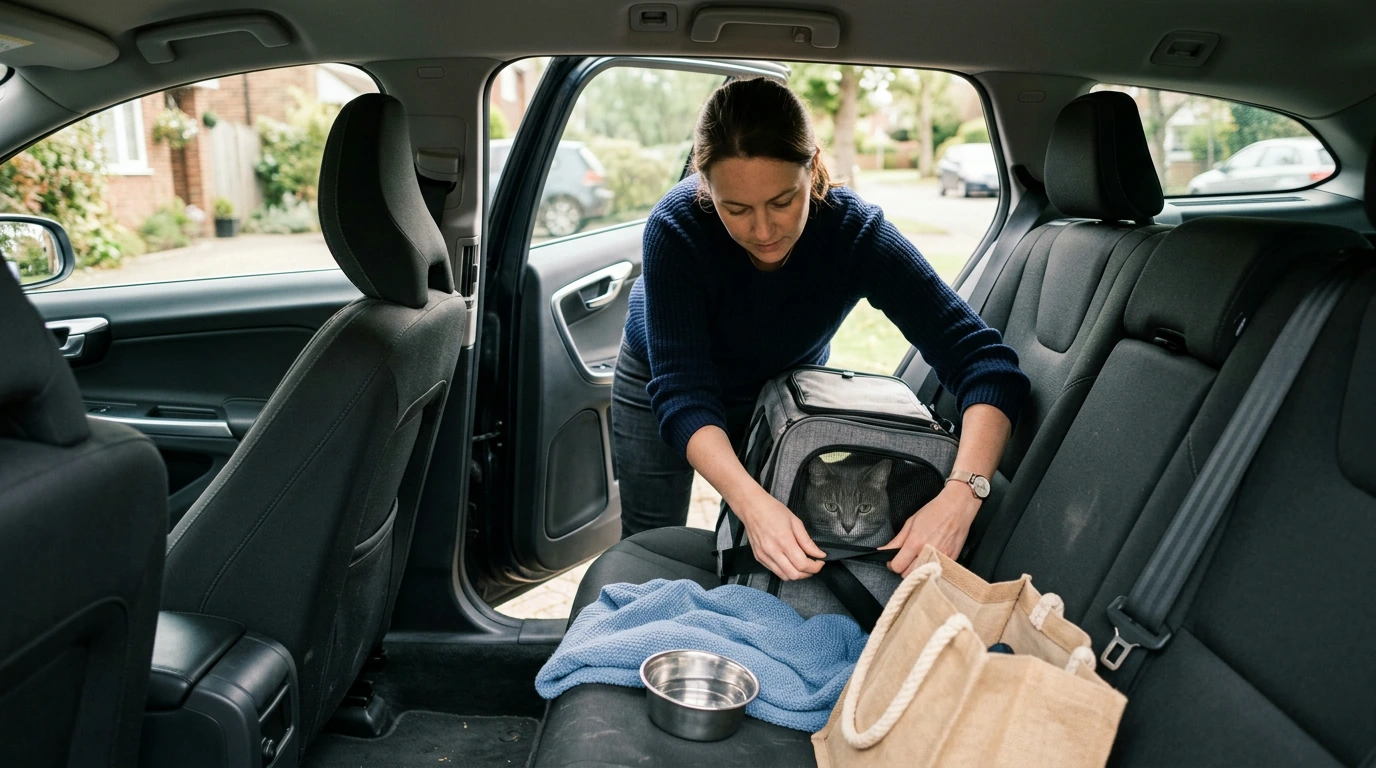
Car travel introduces unfamiliar motion, sounds, scents, and surroundings. A more predictable journey begins at home, where your cat can become familiar with the carrier before facing the additional sensations of a moving vehicle.
For a long drive, speak with your veterinarian—especially if your cat is elderly, has a chronic condition, experiences motion sickness, or has shown severe travel anxiety. Discuss destination health requirements, vaccinations, nausea management, and any prescribed medication. Never give a cat human medicine or an unprescribed sedative.
Check the listed dimensions for calm starts before the engine does against the available vehicle space before use.
Keep essential supplies in a separate, accessible bag instead of under other luggage. Bring more food and medication than the itinerary requires in case traffic, weather, or vehicle problems cause delays.
Cat Car-Travel Packing Checklist
| Category | Items | Why They Matter |
|---|---|---|
| Safety | Secure carrier, ID tag, microchip details, recent photo | Supports safe restraint and identification |
| Food and water | Regular food, familiar water, bowls, treats | Maintains routine and limits dietary changes |
| Comfort | Bedding, towel, familiar toy | Provides familiar scents and warmth |
| Hygiene | Small litter tray, litter, scoop, waste bags, cleaner | Simplifies toilet breaks and accident cleanup |
| Health | Medication, records, veterinarian contacts | Supports routine care and emergency decisions |
Pack a tested harness and leash for controlled transfers, but do not use them as the primary restraint in a moving vehicle. Introduce the harness at home and verify that your cat cannot back out of it.
Featured in this guide
How to Travel with a Cat in the Car – A Complete eBook Guide for Stress-Free Road Trips with Your Feline Companion
Keep essential supplies in a separate, accessible bag rather than beneath other luggage. Bring sufficient regular food and medication to account for possible delays.
Ask your veterinarian about meal timing if your cat becomes carsick. A smaller pre-trip meal may help some cats, but hydration and individual medical needs must be considered. Avoid introducing unfamiliar foods immediately before or during the journey.
At safe stopping locations, check for repeated vomiting, excessive drooling, persistent open-mouth breathing, weakness, collapse, or unusual unresponsiveness. Severe or worsening symptoms require prompt veterinary help.
Keep doors and windows closed whenever the carrier is opened. Most cats are safer remaining inside the carrier until they reach an enclosed room. If a transfer is unavoidable, attach the tested harness and leash before fully opening the carrier.
Choose a direct but unhurried route that accounts for weather, veterinary clinics, and confirmed cat-friendly accommodations. Keep essential supplies within reach so a delay does not require unloading the vehicle beside the road.
For overnight stays, contact the accommodation directly to confirm that cats are accepted and ask about room restrictions, fees, and unattended-pet rules. The term pet-friendly does not always include every species.
Before releasing your cat, inspect the room for open windows, loose screens, accessible vents, hazardous products, and gaps behind furniture. Arrange food, water, litter, bedding, and a hiding place in quiet areas.
Coordinate with housekeeping and place a notice on the door. Return your cat to the carrier whenever an exterior door will remain open.
Check the listed dimensions for make an overnight room escape-resistant against the available vehicle space before use.
The How to Travel with a Cat in the Car digital guide offers a portable reference for organizing preparations at home and reviewing trip details while away. Digital resources should supplement, not replace, individualized veterinary care.
Check the listed dimensions for use a repeatable digital reference against the available vehicle space before use.
At the destination, begin with one quiet, secure room containing food, water, litter, bedding, and a hiding place. Let your cat emerge and investigate voluntarily rather than forcing interaction or providing immediate access to a large unfamiliar space.
Monitor eating, drinking, urination, bowel movements, and behavior. Seek veterinary guidance for persistent vomiting, breathing difficulty, inability to urinate, profound lethargy, or continued refusal to eat. Restore familiar feeding, play, and rest routines as soon as practical.
After the trip, record which carrier setup, feeding schedule, comfort items, and break routine worked best. Those notes can make the next journey more consistent.
Compare related options such as How to Choose the Right Pet Shampoo | Digital Guide for Pet Owners | Pet Care eBook | Pet Grooming Checklist | Dog & Cat Bathing Tips | Natural Ingredient Pet Shampoo Advice to match features, dimensions, and use case before choosing.
Travel Cat sells carriers, harnesses, and other feline travel products, but suitability depends on the specific item and your cat’s size and behavior. Review current product specifications, fit instructions, safety features, and verified customer feedback before purchasing.
It is a rough adjustment framework suggesting approximately three days to decompress, three weeks to learn a routine, and three months to feel settled. It is not a medical rule, and some cats need considerably more or less time.
A travel cat is a cat accustomed to controlled trips in a secure carrier or, when appropriate, a properly fitted harness. Comfortable travel behavior is generally developed through gradual, positive practice rather than being an automatic trait.









Leave a comment