35% off on product page · save $8.61
Is a Travel Cat Harness Good? Fit and Safety Tips
A Travel Cat harness can be a good choice if your cat needs a secure, comfortable way to practice walking on a leash or move between a carrier and a safe stopping point. The brand name alone cannot guarantee a good fit, though. Check the size chart for the specific model, measure your cat’s chest, and make sure the harness sits snugly without restricting the shoulders.

A well-fitting harness should stay in place when your cat backs up, twists, or crouches. Fasten every closure, then gently test whether the harness could slip over the shoulders; you should also be able to fit about two fingers under the straps. If your cat is between sizes, compare the model’s adjustment range with their measurements rather than choosing by weight alone.

Featured in this guide
How to Travel with a Cat in the Car – A Complete eBook Guide for Stress-Free Road Trips with Your Feline Companion
1
Choose the restraint size for the dog and vehicle position
2
Attach the restraint to the approved vehicle anchor point
3
Check the restraint tension before the vehicle moves
4
Introduce the dog to the restraint during the safety check
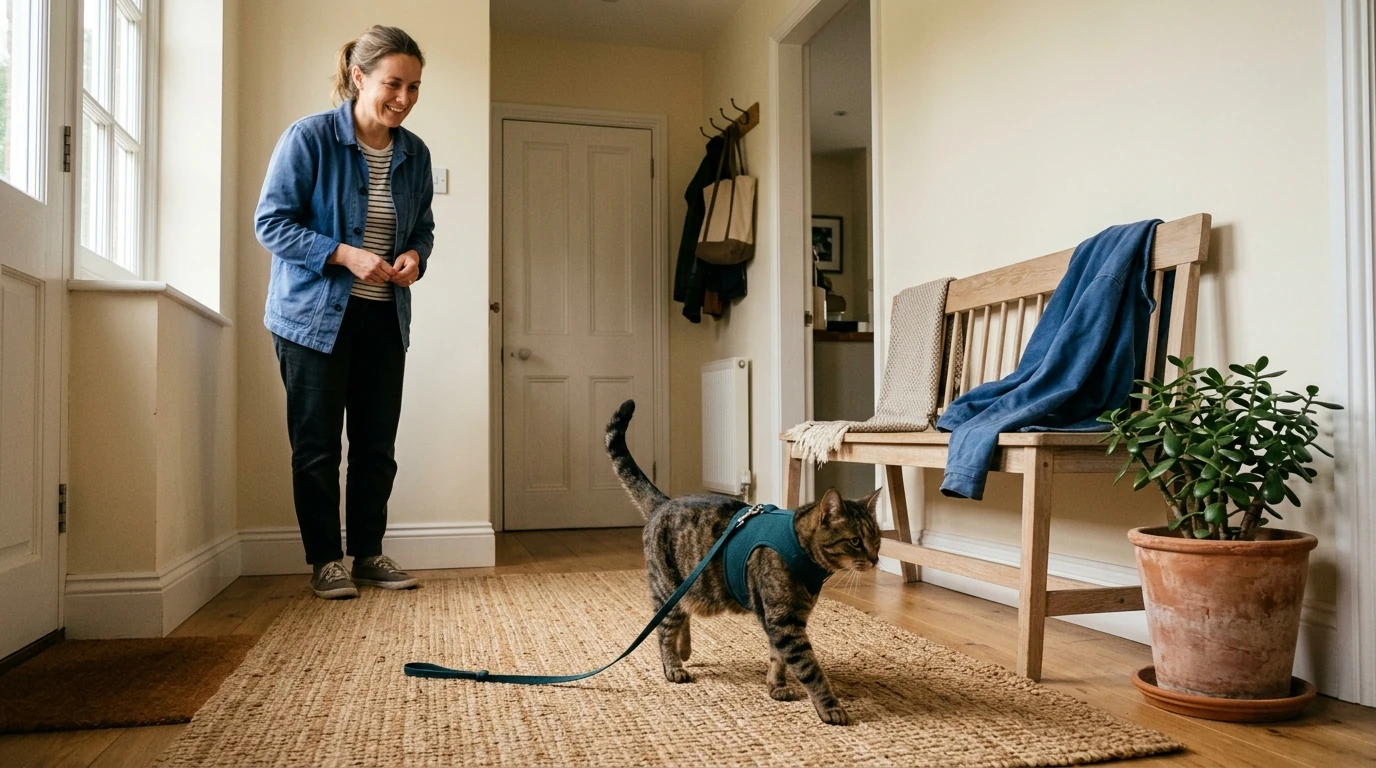
Even a carefully fitted harness is useful only if your cat can move comfortably in it. Let your cat sniff it first, then try short indoor sessions paired with treats before attaching a leash. Watch for rubbing at the armpits, a stiff gait, or repeated attempts to escape, and adjust the fit or try a different style if those problems continue.
A harness is helpful for controlled movement outside the car, but it is not a substitute for a secure carrier during the drive. Put your cat in a carrier that closes fully and follow the carrier manufacturer’s instructions for placing it in the vehicle. Do not assume a standard walking harness is crash-tested or attach it to a seat belt unless its manufacturer specifically approves that use. For more trip-planning advice, see the guide to traveling with a cat in the car.
Compare the harness’s closure type, adjustable points, and material with your cat’s behavior. A cat that tries to back out of gear needs particular attention to shoulder fit, while a cat sensitive to bulky fabric may prefer a lighter design. Inspect stitching and hardware before each outing, and use a leash made for the harness rather than improvising a connection.
Owner experiences vary by cat and harness model, so reviews are most useful when they describe fit, ease of adjustment, and whether a cat tried to back out. Look for feedback from owners whose cats have a similar build to yours, then verify the measurements against the current size chart.
The best harness is one your cat cannot easily slip out of and can wear comfortably during transfers or a supervised break. It does not replace an airline-approved carrier; check your airline’s current pet rules and carrier requirements before your flight.









Leave a comment