35% off on product page · save $8.61
Can Cats Travel in a Car for 7 Hours? A Practical Guide
Yes, many cats can travel in a car for seven hours, but their comfort depends on their health, temperament, and preparation, so talk with your veterinarian beforehand if your cat is elderly, ill, pregnant, or has a history of severe travel anxiety. A seven-hour drive is more manageable when you plan for secure confinement, a comfortable temperature, water, and opportunities to check on your cat along the way.

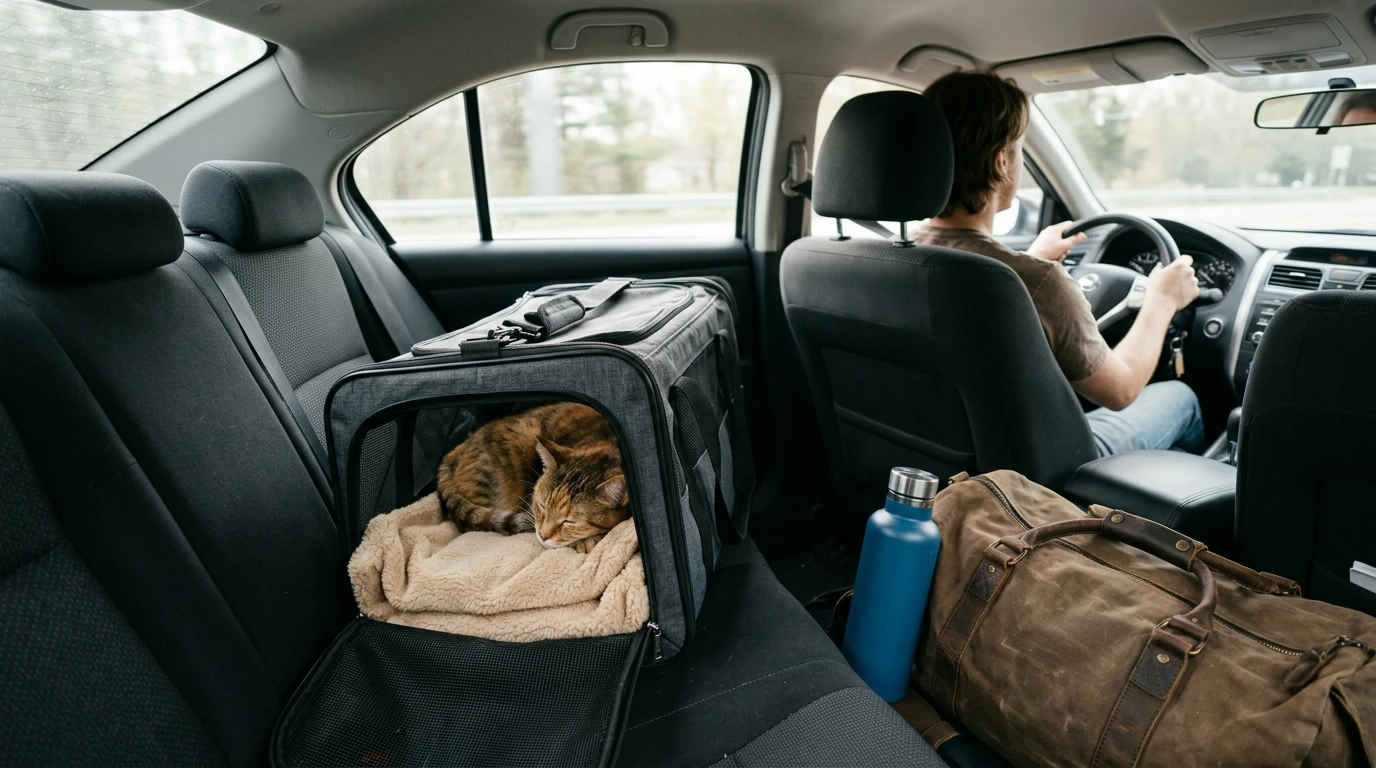
Choose a sturdy, well-ventilated carrier large enough for your cat to stand, turn around, and lie down, then secure it in the back seat according to the carrier manufacturer’s instructions so it cannot shift during the drive. Before departure, leave the carrier open at home with familiar bedding inside and, if time allows, take a few short practice drives to help your cat become accustomed to the motion and sounds.

Featured in this guide
How to Travel with a Cat in the Car – A Complete eBook Guide for Stress-Free Road Trips with Your Feline Companion
Pack water, a travel bowl, your cat’s usual food, waste bags, cleaning supplies, and a small litter box with familiar litter; offer water and a chance to use the litter box during planned stops, although some cats may refuse either while traveling. Keep doors and windows closed before opening the carrier, and never leave your cat alone in a parked car, where temperatures can become dangerous quickly.
Keep the cabin at a comfortable temperature and watch for signs of distress such as persistent panting, drooling, vomiting, or unusual lethargy; stop safely and contact a veterinarian if symptoms are concerning or do not improve. If you want more trip-planning guidance, our team recommends our eBook, How to Travel with a Cat in the Car, and we suggest discussing any motion-sickness or anxiety medication with your veterinarian rather than giving it without advice.
Check the product’s listed specifications when evaluating watch for discomfort on the road.
There is no single safe number of hours for every cat, because health, stress tolerance, temperature, and access to care all matter. For longer journeys, plan regular stops to check on your cat and offer water and a litter-box opportunity, and ask your veterinarian for advice tailored to your cat.
Many cats can travel for three hours in a secure, well-ventilated carrier, especially when they have had time to get used to it beforehand. Bring water and cleaning supplies, keep the car comfortable, and monitor your cat for signs of distress throughout the trip.










Leave a comment