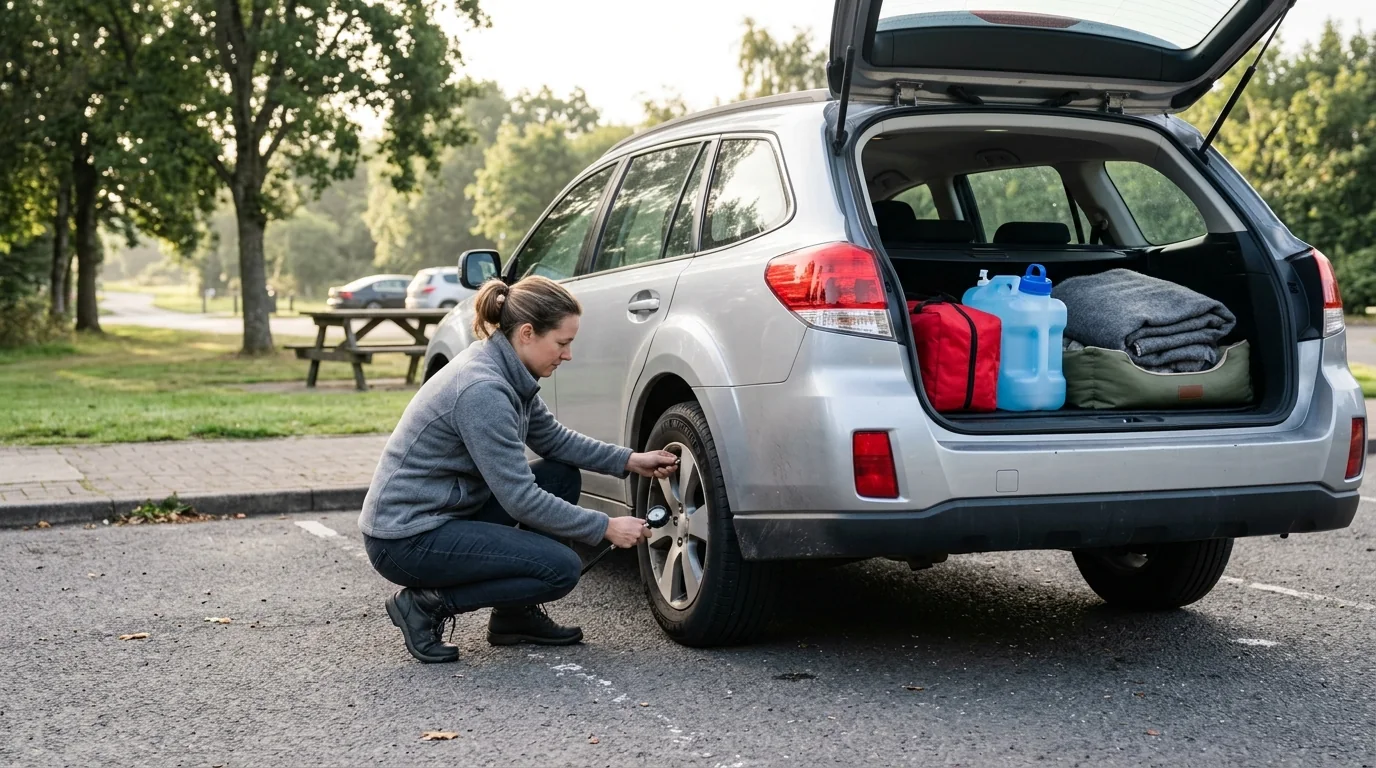
How to Prepare Your Car for a 1,000-Mile Trip
A 1,000-mile drive puts sustained stress on tires, fluids, brakes, and the cooling system. Schedule your inspection several days before departure so you have time to address problems rather than discovering them on the highway.

Check tire pressure when the tires are cold and inflate them to the specification on the driver-side doorjamb. Inspect the tread and sidewalls for uneven wear, cracks, bulges, or embedded objects, and confirm that the spare tire is inflated.
Test the brakes for squealing, grinding, vibration, or a soft pedal. Have a mechanic inspect the pads and rotors if anything feels unusual.
Featured in this guide
Road Trip Ready with Your Dog: How to Prepare Your Dog for a Long Car Trip eBook Guide
Verify the engine oil, coolant, brake fluid, transmission fluid, and windshield-washer fluid levels. If an oil change or scheduled service is due soon, complete it before the trip.
Look for battery corrosion and make sure the terminals are secure. Test the headlights, brake lights, turn signals, hazard lights, and windshield wipers before leaving.
Carry a tire-pressure gauge, jack, lug wrench, jumper cables or a jump starter, flashlight, first-aid kit, water, phone charger, and basic tools. Bring proof of insurance and roadside-assistance details, then secure luggage so it cannot shift during sudden braking.
Review your route, fuel stops, weather, and possible construction. Plan a short break about every two hours and share the driving when possible. For a more detailed checklist, see the complete long-trip car preparation guide.
Traveling 1,000 miles in a car generally takes 15 to 18 hours of driving. Fuel, meal, traffic, and rest stops may extend the total time considerably.
The $3,000 rule for cars commonly suggests reconsidering a vehicle when an upcoming repair costs around $3,000 or approaches its market value. The decision should also account for reliability, replacement cost, and future maintenance.
The 3-3-3 rule for a road trip generally means driving no more than 300 miles per day, arriving by 3 p.m., and staying for three nights. It is most often used for slower RV travel rather than a fixed safety standard.
Before a long road trip, check the tires, brakes, fluids, battery, lights, belts, hoses, and wipers. Complete overdue maintenance and pack emergency supplies.
About 200 to 300 miles a week is normal for a car based on typical annual driving averages. Actual mileage varies significantly with commuting and travel habits.
Driving 1,000 miles in two weeks is above the typical weekly average, but it is not excessive for a properly maintained car. Check fluid levels and tire pressure before and after the trip.










Leave a comment