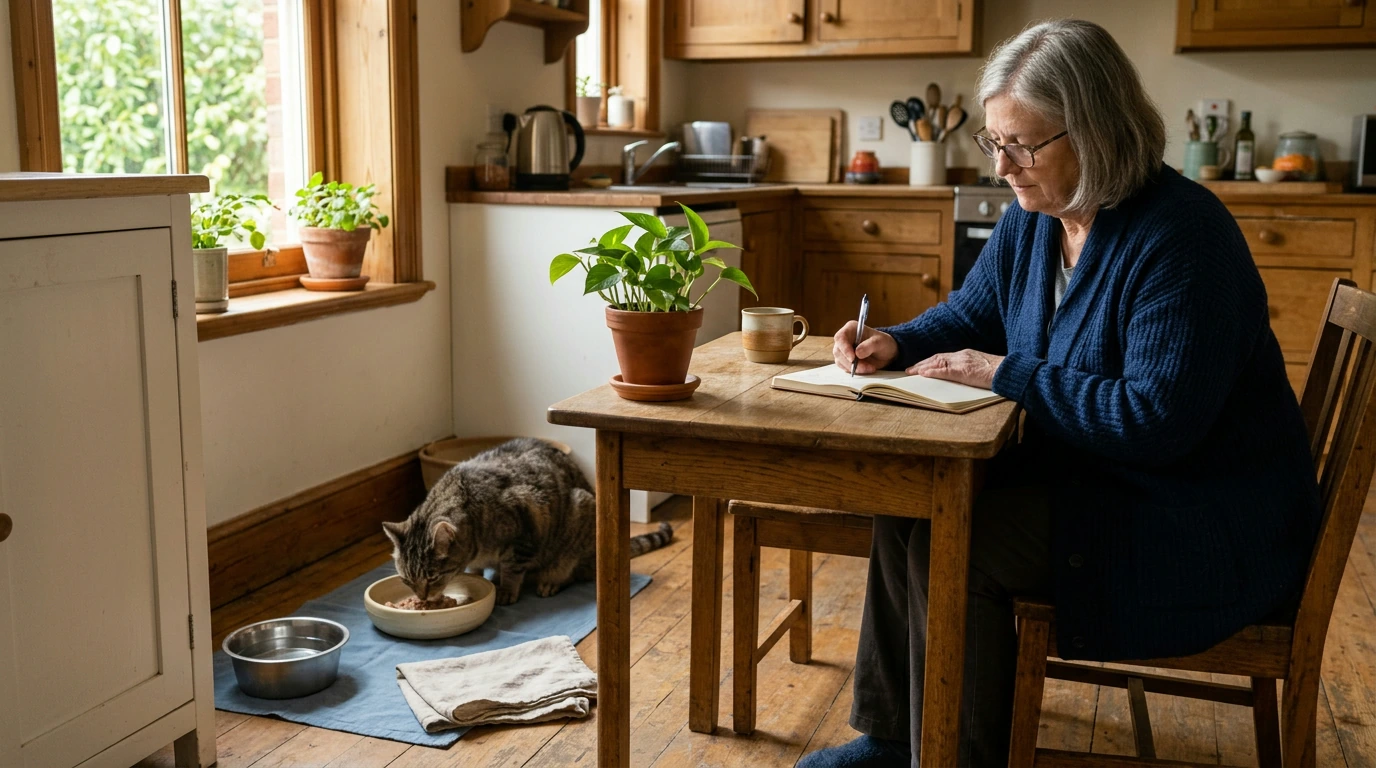
A More Thoughtful Way to Feed Your Senior Cat
A “senior” label on a food package does not, by itself, tell you whether that food is right for your cat. Body condition, activity level, dental health, and medical history all matter. One older cat may be maintaining a healthy weight on a familiar diet, while another may need a feeding plan tailored to a diagnosed condition.
Before switching foods, ask your veterinarian whether a change is needed and what the new food should accomplish. Bring the name of your cat’s current food, the amount you offer, and any treats or supplements. That information helps your veterinarian assess the whole diet rather than a single meal. For general background, see the Cornell Feline Health Center’s feeding guidance and the AAHA/AAFP Feline Life Stage Guidelines.
Check the listed dimensions for start with your cat’s current needs against the available vehicle space before use.

Serve meals on a consistent schedule, with fresh water and food in a quiet place your cat can reach comfortably. In a multi-cat home, separate feeding spots can help you see who has eaten.
Consider a stable, shallow dish near a favorite resting area, away from the litter box. If your cat drops food, chews differently, or avoids meals, arrange a veterinary assessment rather than assuming a different bowl or food texture will resolve it.
Check the listed dimensions for make the everyday routine easier against the available vehicle space before use.
Featured in this guide
Essential Tips for Feeding Your Senior Cat | eBook for Pet Owners | Digital Download Guide with Nutritional Advice, Feeding Strategies & Checklists
A brief feeding record can be more useful than trying to remember whether your cat has been “eating less lately.” Note when a change began and whether it followed a new food, a disrupted routine, or another event. Record both what you offer and what remains; an empty bowl is harder to interpret when several pets share a feeding area.
Use this check-in as an observation checklist, not a diagnostic tool. It can help you give your veterinarian specific details, but it cannot explain the cause of a change.
Senior Cat Feeding Check-In
| What to watch | What to note | Next step |
|---|---|---|
| Appetite | Food offered and amount eaten | Contact a veterinarian about a sudden or persistent decrease |
| Weight | Regular weigh-ins and visible body changes | Ask about unexplained loss or gain |
| Drinking | Noticeable changes in water intake | Discuss persistent changes with a veterinarian |
| Eating comfort | Dropping food, chewing differently, or avoiding meals | Arrange a veterinary assessment |
Bring your notes to veterinary appointments, including dates and any questions you want to ask. Patterns in appetite, weight, drinking, and eating behavior can make the conversation more productive. If a change is sudden or concerning, call rather than waiting to collect more entries.
The eBook includes nutritional advice, feeding strategies, and checklists. Use those checklists alongside your own meal notes and your veterinarian’s recommendations, so everyone who feeds your cat can follow the same plan.
General guidance cannot replace an individualized plan for a cat with a diagnosed condition.
Compare related options such as Anti-Tip Ceramic Cat Bowl – Non-Slip, Anti-Vomiting Pet Feeder with Flower Design to match features, dimensions, and use case before choosing.
Before choosing, compare the product details with your daily routine, available space, care needs, and preferred setup. The strongest option is usually the one that fits the intended use clearly and remains simple to clean, store, and check before repeat use.
This question concerns feeding human babies, not senior cats. Do not apply an infant feeding rule to your cat; ask your veterinarian about an appropriate schedule.
Breastfeeding advice is for human infants and does not guide senior cat feeding. For your cat, focus on a consistent routine, accessible bowls, and veterinary advice about diet changes.
A breast milk rule does not apply to an older cat’s meals. Ask your veterinarian what food, amount, and schedule fit your cat’s needs.
Baby-feeding rules are not a reliable way to plan meals for senior cats. Your veterinarian can help you set a routine based on your cat’s health and body condition.









Leave a comment