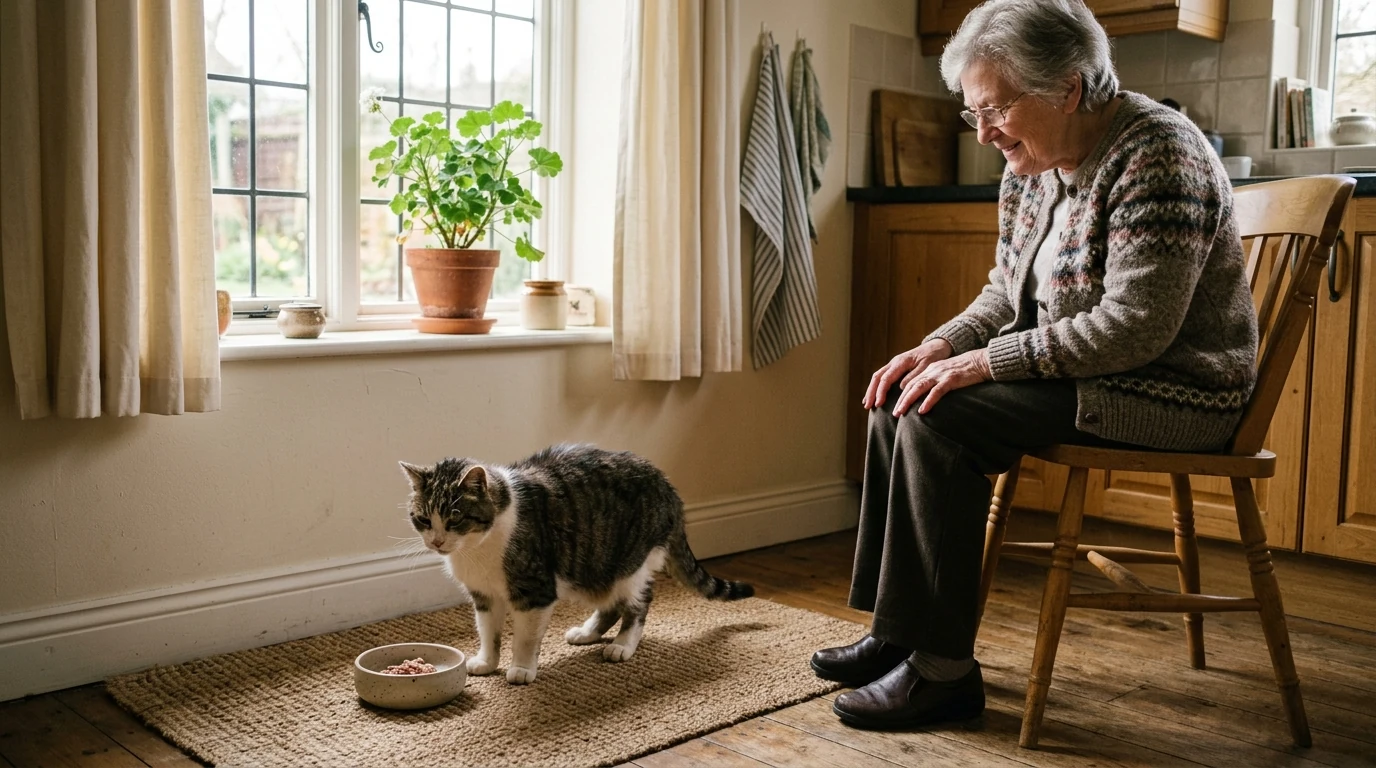
Do Senior Cats Eat Less as They Get Older? What to Watch
Some senior cats eat less as they age, but a smaller appetite is not something to dismiss as “just getting older.” Changes in smell, dental comfort, activity, or health can affect how much your cat eats, so the most useful comparison is with your cat’s usual habits—not with another cat’s bowl. A cat who eats smaller meals but maintains a stable weight may need a different conversation with your veterinarian than a cat whose appetite and weight are both falling.

Notice whether your cat is eating a little less over time or suddenly refusing food, and watch for weight loss, vomiting, trouble chewing, or a change in drinking habits. If your cat stops eating, seems unwell, or has a persistent appetite change, contact your veterinarian promptly rather than trying to solve it only by changing foods. If you have more than one cat, consider feeding them separately for a few meals so you can tell how much your senior cat actually eats.
Check the product’s listed specifications when evaluating when should you pay closer attention.

Featured in this guide
Essential Tips for Feeding Your Senior Cat | eBook for Pet Owners | Digital Download Guide with Nutritional Advice, Feeding Strategies & Checklists
Offer meals in a quiet, easy-to-reach spot, and keep fresh water nearby; these small adjustments can help if getting to the bowl has become uncomfortable. If chewing seems difficult, ask your veterinarian about an appropriate food texture, and introduce any diet change gradually unless your veterinarian advises otherwise. You can also try a consistent mealtime routine and remove uneaten food as appropriate for the type of food you serve, making it easier to recognize changes from day to day.
Measure what you serve and what remains, then track your cat’s weight and body condition so you can spot a meaningful change instead of guessing from one unfinished meal. The right daily amount depends on your cat’s size, body condition, activity, food, and medical needs; our Essential Tips for Feeding Your Senior Cat digital guide offers nutritional advice, feeding strategies, and checklists to help you organize those observations for a conversation with your veterinarian. Bring the food label and your meal notes to that conversation, especially if your cat has a diagnosed condition or follows a prescribed diet.
Appetite can change with age, but eating less is not automatically normal or harmless. Keep track of how much your cat actually eats, and call your veterinarian if the change persists or comes with other symptoms.
There is no single daily portion that fits every senior cat, because foods vary in calories and cats vary in their needs. Use the food’s feeding directions as a starting point, then ask your veterinarian to help adjust the amount based on your cat’s weight, body condition, and health.









Leave a comment