
When Should Cats Start Eating Senior Cat Food?
Many cats enter their senior years around age 7 to 10, but that does not mean every cat needs senior cat food on a particular birthday. We suggest using that age range as a reminder to review your cat’s weight, appetite, activity, and current diet with your veterinarian rather than as an automatic date to switch foods. If your cat is doing well, the best next step may be to keep monitoring those changes instead of replacing a food they already eat comfortably.
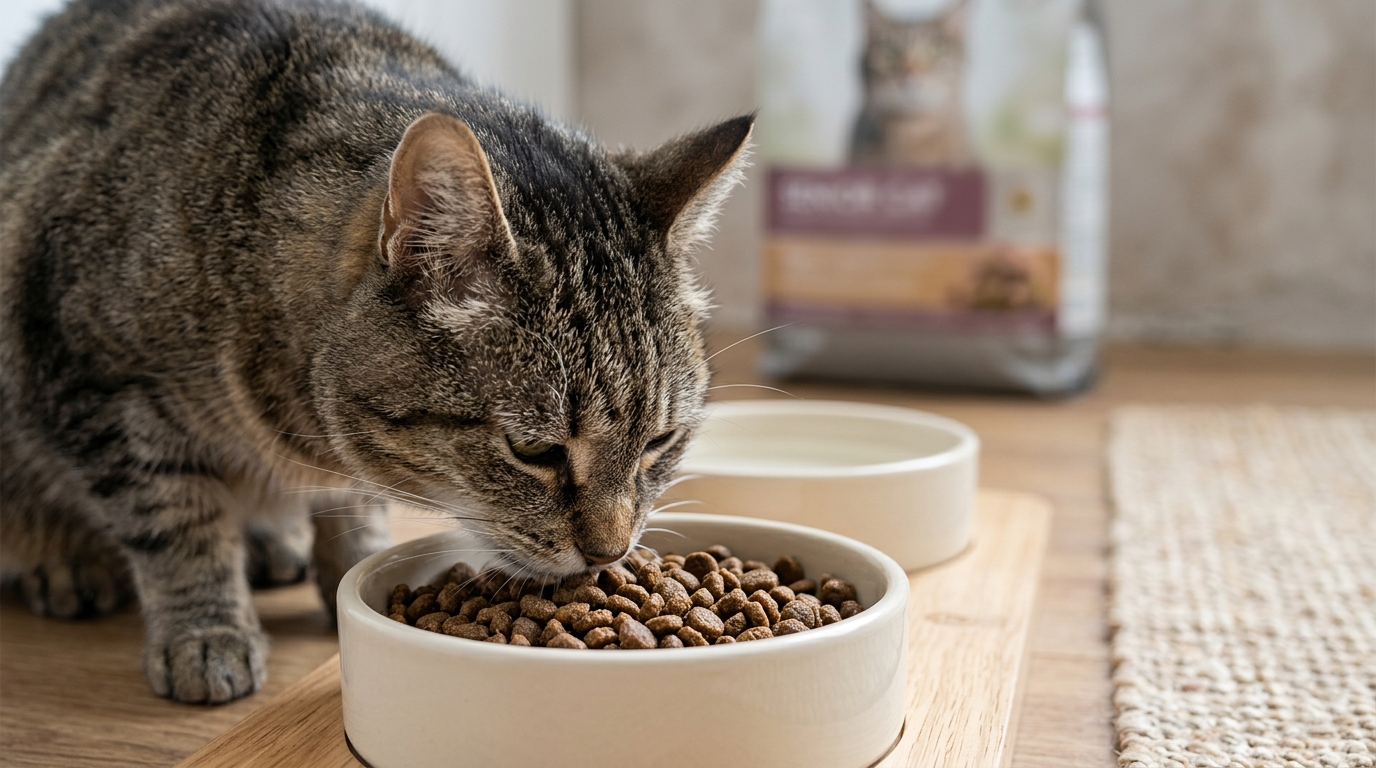
A healthy older cat that maintains its weight and eats well may do fine on its current complete and balanced food, while another cat may need a diet tailored to a medical condition. Your veterinarian can help you compare options based on your cat’s body condition and health, especially if you have noticed weight loss, increased thirst, vomiting, or a change in how much your cat eats. The word “senior” on a package is less important than whether the food fits your individual cat’s needs.
Featured in this guide
Essential Tips for Feeding Your Senior Cat | eBook for Pet Owners | Digital Download Guide with Nutritional Advice, Feeding Strategies & Checklists
If you and your veterinarian decide a new food is appropriate, introduce it gradually by mixing increasing amounts of the new food with the old food over about a week; slow down if your cat develops digestive upset. We also recommend measuring portions and tracking your cat’s weight, since changing foods does not always mean your cat needs the same serving size. Note how much your cat actually eats during the transition, not just how much you put in the bowl.
For more day-to-day feeding considerations, our Essential Tips for Feeding Your Senior Cat digital guide brings together nutritional advice, feeding strategies, and checklists. You can use it to organize questions and observations for a conversation with your veterinarian about your cat’s individual needs.
A sudden loss of appetite is not a normal part of aging, and it is more important to address than choosing a food labeled “senior.” Contact your veterinarian promptly if your cat refuses food, and seek urgent veterinary help if your cat seems weak, is vomiting repeatedly, has trouble breathing, or has gone about 24 hours without eating. Do not wait for a new food to solve a sudden appetite change, particularly in a very old cat.
Start discussing your cat’s diet with your veterinarian around age 7 to 10, but switch only if a senior formula suits your cat’s health and nutritional needs. Your cat’s weight, appetite, and any medical conditions matter more than age alone.









Leave a comment