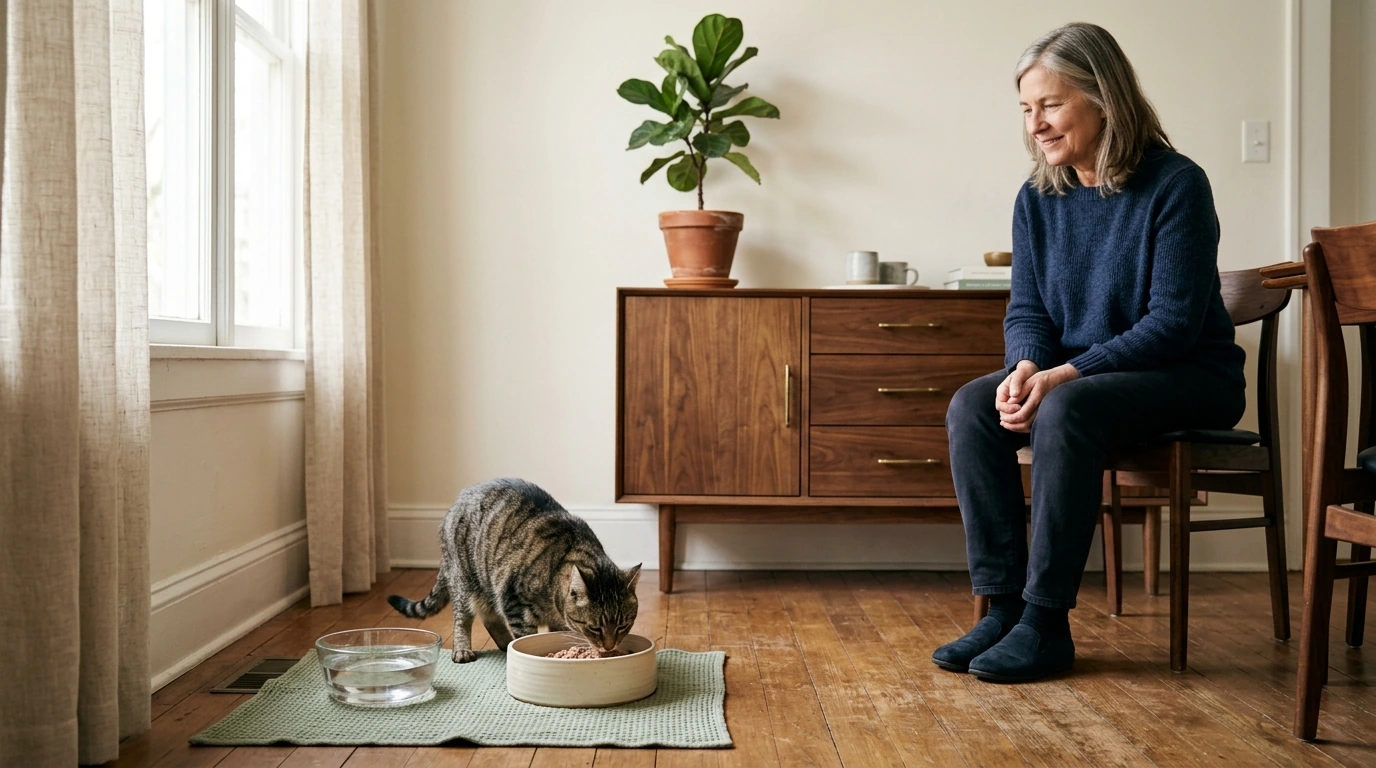
Is Fancy Feast Good for Senior Cats? Benefits & Risks
Many Fancy Feast recipes are formulated for adult cat maintenance, which can make them suitable for otherwise healthy senior cats. Check the package for an AAFCO nutritional adequacy statement indicating that the food is “complete and balanced,” rather than intended only for supplemental or intermittent feeding.

Fancy Feast canned foods typically contain about 75% to 80% moisture, helping older cats increase their daily water intake. Serve the food at room temperature, and mix in one or two teaspoons of warm water if your cat tolerates the softer consistency.

Featured in this guide
Essential Tips for Feeding Your Senior Cat | eBook for Pet Owners | Digital Download Guide with Nutritional Advice, Feeding Strategies & Checklists
Senior cats may gain weight as activity declines or lose weight because of illness and reduced appetite. Review the calories listed on each can, measure daily portions instead of free-feeding, and weigh your cat every two to four weeks; unexplained changes of 5% or more warrant a veterinary appointment.
Fancy Feast is not automatically appropriate for cats with kidney disease, diabetes, food allergies, or other conditions requiring controlled nutrients. Ask your veterinarian to compare the recipe’s phosphorus, protein, carbohydrate, sodium, and calorie levels with your cat’s diagnosis; some values may require confirmation from the manufacturer.
Introduce Fancy Feast over seven to ten days by replacing approximately 25% of the previous food every two or three days. Slow the transition if vomiting, diarrhea, constipation, or appetite loss occurs, and contact a veterinarian promptly if a senior cat refuses food for 24 hours.
Fancy Feast can therefore be a practical option for many elderly cats, particularly when its texture encourages eating and its nutritional profile fits the cat’s health status. For a broader review of formulas, benefits, and limitations, see the complete Fancy Feast guide for senior cats.
The best cat food for elderly cats is complete and balanced, easy to eat, appropriately calorie-dense, and compatible with any diagnosed medical condition. A veterinarian can recommend specific protein, phosphorus, sodium, and calorie targets after reviewing the elderly cat’s weight, bloodwork, dental health, and hydration.
Senior cats can eat Fancy Feast recipes labeled complete and balanced for adult maintenance if they do not require a therapeutic diet. Fancy Feast should be portioned according to the recipe’s calorie content, while the senior cat’s weight, digestion, hydration, and kidney health are monitored.









Leave a comment