Quiet, Low-Maintenance Pets: A Guide for Busy People
A peaceful home and a busy schedule can coexist with pet ownership, but no animal is silent or care-free. Before you choose a companion, decide what “quiet” means in your household. Are occasional sounds fine, while barking during work calls is difficult? Would nighttime activity interrupt someone’s sleep?
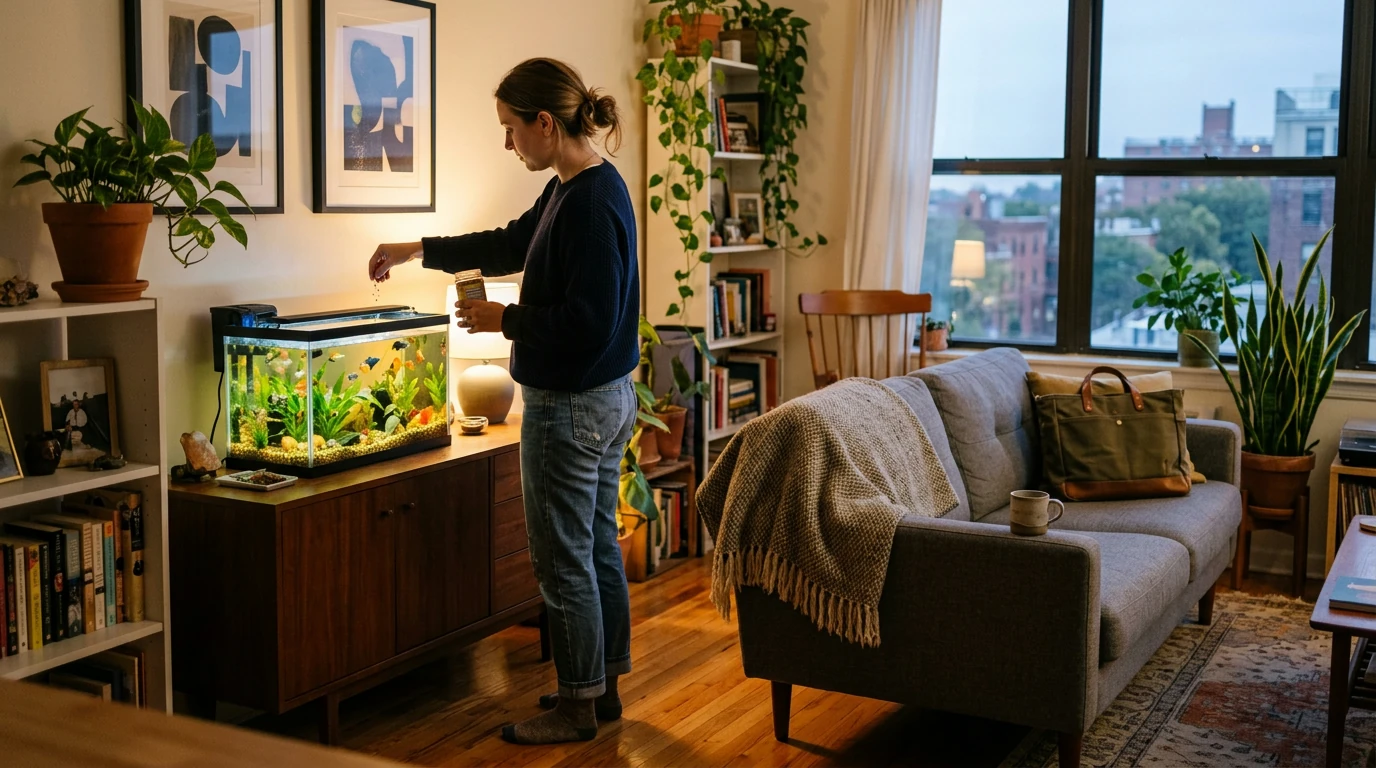
Low noise is different from low effort. A fish won’t vocalize in your home, yet its aquarium needs a suitable setup and regular water care. A cat may be relatively quiet but still needs meals, a clean litter box, play, and veterinary care. Consider your working hours, space, household members, budget, and the time you can give a pet each day. An individual animal’s temperament matters more than a reassuring species or breed label.

Use these questions to narrow your options, not to predict an individual animal’s temperament.
| Pet to consider | Regular care | Ask before choosing |
|---|---|---|
| Adult cat | Meals, fresh water, litter care, play, and veterinary care | What are this cat’s activity and social needs? |
| Small mammals, such as guinea pigs | Species-appropriate food, habitat cleaning, and companionship | Can you meet this species’ social and space needs? |
| Fish | Feeding, water-quality checks, and tank maintenance | Can you maintain an appropriate aquarium? |
| Adult dog | Walks, training, enrichment, company, and veterinary care | What is known about this dog’s behavior when left alone? |
Consider when each task happens. A quiet habitat can still demand careful upkeep, and a calm dog still needs exercise and interaction.
Featured in this guide
Quiet & Low-Maintenance Pet Checklist | Digital Download | What Pets Are Quiet and Low Maintenance | Pet Care Guide for Busy People
No breed guarantees a quiet, low-effort companion. Barking, grooming, exercise needs, and comfort with solitude vary between dogs. An adult dog observed in a shelter or foster home may offer more useful information about its current behavior than a breed label.
Ask caregivers when the dog barks, how it settles after activity, and what they know about its behavior when people leave. Be clear about what remains unknown. Do not assume a dog will adapt to a long workday or that any breed is free of separation anxiety. Plan for appropriate company, exercise, and gradual alone-time practice.
For play ideas alongside training and daily exercise, you can explore our Brain Boost Fun for Dogs printable checklist.
Walk through a weekday: who feeds and cleans in the morning, what care is needed while you are away, and when you will provide evening interaction? Repeat the exercise for a late shift, illness, or travel.
Budget for recurring supplies and veterinary expenses. Identify a veterinarian who treats the species you are considering and a person who can provide backup care. For social animals and pets with specialized habitats, seek species-specific welfare advice before committing.
Our Quiet & Low-Maintenance Pet Checklist is a digital download you can use to organize your household routine and pet-care questions. Take those questions to shelters, veterinarians, and experienced caregivers. The checklist can support your decision, but it does not replace advice about an individual animal or its species.
Before choosing, compare the product details with your daily routine, available space, care needs, and preferred setup. The strongest option is usually the one that fits the intended use clearly and remains simple to clean, store, and check before repeat use.
No breed guarantees a quiet or easy-care dog. An adult dog with a known temperament may be easier to assess; ask about barking, exercise, grooming, and behavior when left alone.
No breed is reliably free of separation anxiety. Focus on the individual dog and whether you can provide appropriate company and support.
There is no universally calmest pet. Compare an individual animal’s temperament with its social, habitat, exercise, and care needs.
There isn’t a breed that guarantees a calm, quiet dog. Meeting an adult dog and discussing its observed behavior will tell you more than a breed label alone.








Leave a comment