25% off on product page · save $6.00
Pet Rules for Kids: A Family Guide to Safe, Kind Care

Choose rules that describe actions your child can see and do. “Be nice” is a good intention, but “ask an adult before approaching,” “use gentle hands,” and “give our pet space while they eat, sleep, or go to their quiet place” are easier to follow. Start with three to five rules rather than a long list.
Show your child what each rule looks like during a calm moment. You might practice asking permission before greeting the pet, then demonstrate a gentle touch when the pet is comfortable with contact. Supervise interactions, even when your child knows the rules and wants to help. An adult should step in whenever either the child or pet needs a break.
The CDC’s Healthy Pets, Healthy People guidance offers additional information on keeping families healthy around animals. For dog-owning households, the American Veterinary Medical Association’s dog bite prevention guidance is another useful resource for adults.
Choose a supervised task that suits your child and your pet. A younger child might help refill a water bowl with you; a school-age child might follow a feeding checklist while you measure the food. An older child might help plan an activity that you approve.
Keep the adult’s role explicit: you confirm meals and water, make handling decisions, and arrange health care. A visible task list can help your child notice their contribution without making them solely accountable for the pet.
Featured in this guide
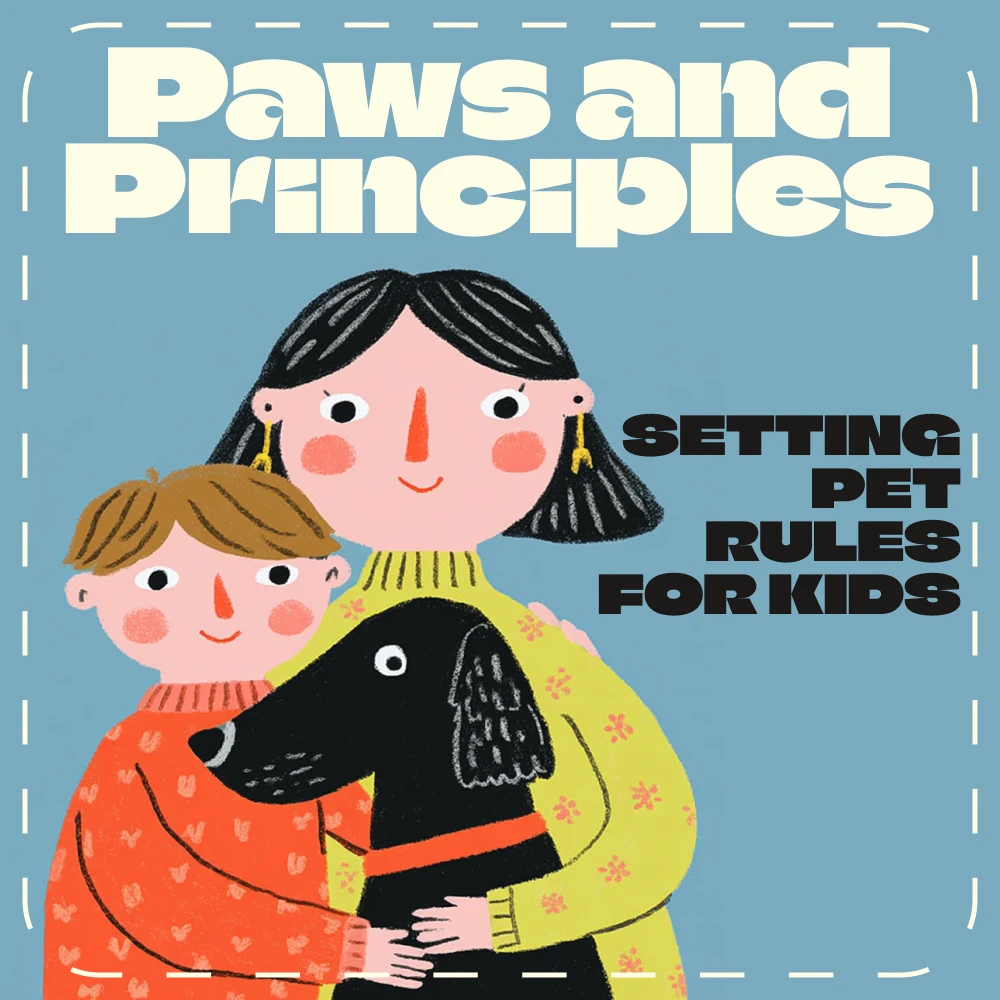
Paws and Principles: Setting Pet Rules for Kids with Confidence | Family eBook Guide for Setting Pet Rules for Children, Teaching Responsibility & Empathy
Ask your child what they notice: Is the pet approaching, moving away, resting, or seeking a quiet place? You do not need to guess what the pet feels to respect their distance. Try a phrase your child can reuse: “Our pet is resting, so we’ll wait.”
If your pet repeatedly seems fearful or uncomfortable around family members, ask your veterinarian or a qualified animal-behavior professional for guidance.
Check the product’s listed specifications when evaluating make room for the pet’s choice.
Write your rules and supervised jobs where your family can see them. At a regular check-in, ask what went well and whether a task still fits your child’s abilities and your pet’s needs.
When your child forgets a rule, calmly pause, demonstrate it again, and practice later if both child and pet are comfortable. For a dog who enjoys games, our Brain Boost Fun for Dogs enrichment checklist offers separate activity ideas. Choose what suits your dog and keep an adult involved.
Responsibilities matter, but caring for a pet should also include enjoyable, pet-appropriate time together. Let your child help choose a supervised activity, and teach them that stopping when the pet needs rest is part of the game. A quiet pet does not have to entertain the family on demand.
For families with dogs, our Brain Boost Fun for Dogs enrichment checklist is a separate source of game ideas. Choose activities that suit your individual dog, and keep an adult involved. With a few practiced rules and realistic jobs, you can give your child room to participate while your pet’s needs remain in capable hands.
Watch · product page video
“What a refreshing take on integrating pets and kids! The chapters are well-structured, offering practical tips for setting pet rules. I particularly loved the part about turning chores into bonding moments – it’s been a hit with my family!”
Amoriano product page · Product review
Secure by Design is a cybersecurity approach, not a set of pet rules. Its principles concern building safer technology, so they do not determine how children should interact with animals.
In information security, a common set is confidentiality, integrity, availability, authentication, and nonrepudiation; the exact list varies by framework. For pet safety, use observable household rules and adult supervision instead.
There is no single universally accepted list of seven cybersecurity principles; lists depend on the framework. Cybersecurity principles are separate from the pet-interaction rules your family practices.









Leave a comment