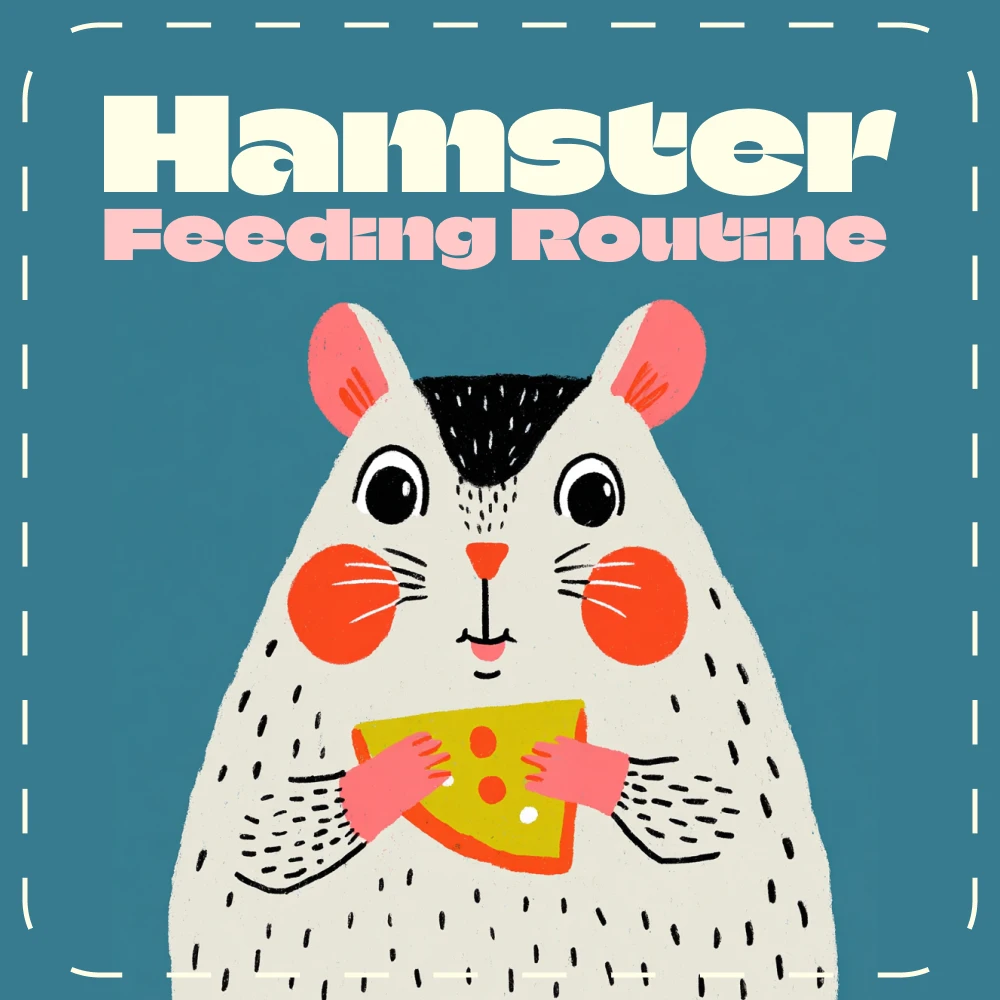
Hamster Feeding Routine: A Simple Daily Checklist

Offer a balanced food made for hamsters, using the package directions and your veterinarian’s guidance to decide how much to serve. The right amount can differ by species, age, size, and health. Rather than relying on a universal scoop size, measure your hamster’s usual portion so you can recognize changes over time.
Check food and fresh water every day, preferably at about the same time. An evening check-in may fit well because hamsters are generally most active around dusk and overnight. Before adding food, see what remains in the bowl and look in hiding places you can reach without dismantling your hamster’s home. Food carried away may be stored, not eaten.
Keep the check-in calm and brief. You do not need to wake your hamster or search through every tunnel each night. The goal is to maintain dependable care while respecting your pet’s space and natural routine.
A schedule is most useful when it records what happened, not just what you intended to do. Note the food offered, what remains visible, and whether the water supply is clean and working. Over several days, those small observations can help you spot a change that one empty bowl might hide.
A practical hamster feeding and care check
| When | What to do | What to note |
|---|---|---|
| Daily | Check water and offer the usual measured portion of balanced food. | Record what you offered and whether food remains in the bowl. |
| When offering fresh foods | Serve a small amount of hamster-safe produce and remove leftovers before they spoil. | Note the food and any change in appetite or droppings. |
| During regular habitat cleaning | Check for spoiled stored food while maintaining a clean, safe space. | Note unusually large stores or changes in eating patterns. |
Remove leftover fresh food promptly; it can spoil in a hidden cache as well as in the bowl. During regular cleaning, check stored food without unnecessarily disrupting the habitat. If your hamster’s eating, drinking, weight, or behavior changes noticeably, contact a veterinarian experienced with small mammals rather than waiting for your notes to show a longer trend.
Featured in this guide
Happy Hamster Feeding Routine Checklist | Printable Guide for Pet Owners | Digital Download on How Often Should I Feed a Hamster | Hamster Care Schedule & Nutrition Planner
A useful feeding record captures the portion offered, food still visible, fresh foods given, and the water check. If several people share care duties, one record can help prevent missed checks or accidental double feeding.
Our Happy Hamster Feeding Routine Checklist is a digital download for pet owners who want a printable place to organize feeding and nutrition notes. Use it as a memory aid, not a portion prescription. If your veterinarian recommends a different food or amount, follow that advice.
Keep balanced hamster food as the foundation of the diet. Introduce suitable fresh foods gradually and in small amounts, and do not let treats replace regular meals. During regular habitat cleaning, look for spoiled stores without unnecessarily disrupting your hamster’s space.
Never offer chocolate, alcohol, or caffeine. Ask a veterinarian experienced with small mammals before offering a food you are unsure about. If your hamster’s eating, drinking, weight, droppings, or behavior changes noticeably, seek veterinary advice rather than waiting for a longer trend to develop.
Food is one part of daily care. Your hamster also needs fresh water, suitable bedding, room to explore, a properly sized exercise wheel, and opportunities to forage. Notice when your pet usually wakes, explores, and grooms so changes are easier to recognize.
We keep care tools species-specific: if your household also includes a dog, our separate Brain Boost Fun for Dogs checklist offers dog-focused activity ideas. It is not a hamster feeding or enrichment guide.
Look for your hamster’s usual eating, drinking, grooming, exploration, and activity during its waking hours. Ask a veterinarian about sudden changes.
Check food and water daily, and offer a measured portion of suitable hamster food at a consistent time. Follow package directions and your veterinarian’s guidance for the amount.
Do not give your hamster chocolate, alcohol, caffeine, or foods known to be toxic to hamsters. Ask your veterinarian before serving an unfamiliar food.
A happy hamster needs enough room to explore, dig, and create separate sleeping and food areas. Choose a secure, well-ventilated enclosure with a deep base, then add at least 6 inches of unscented paper bedding for burrowing. Avoid cedar, pine, and heavily scented materials, which can irritate a hamster’s respiratory system.








Leave a comment