78% off on product page · save $46.78
A Better-Fitting Harness for Calmer Walks
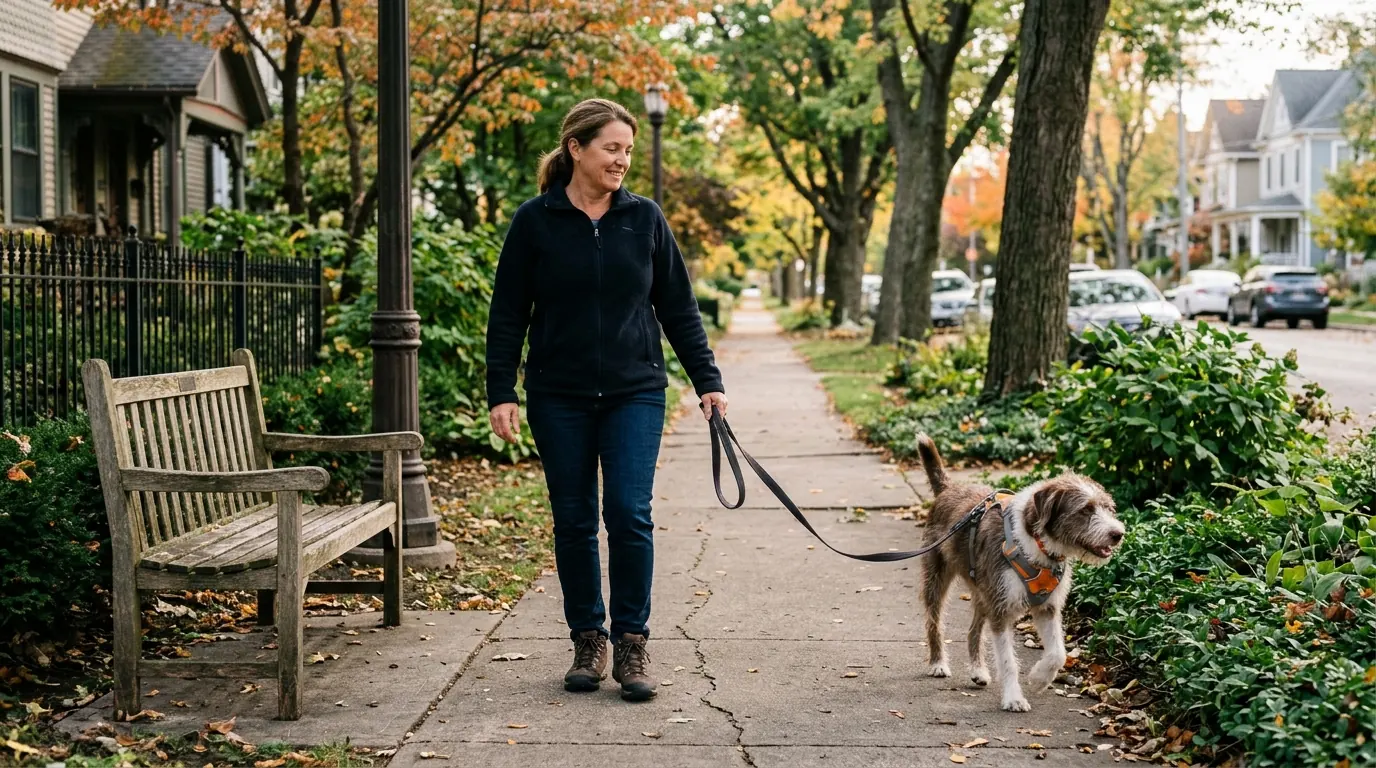
Adjustable straps matter because dogs with similar measurements do not always have the same proportions. Rather than relying on a size label alone, you can make small changes to how the harness sits on your dog. Soft padding adds comfort where the harness rests against the body during everyday walks. Neither feature replaces a fit check: the goal is a harness that stays secure without pinching or changing your dog’s natural stride.
Reflective straps are useful on early-morning and evening outings because they can make your dog more noticeable when light reaches them. They do not create light on their own, so we would still choose a well-lit route and use a light when needed. Think of reflection as one part of a visibility plan, alongside paying attention to traffic and your surroundings.
Begin indoors, where you can watch your dog move without the distractions of a walk. After a brief outdoor trial, check the contact points again. If the harness shifts, your dog’s gait changes, or you notice persistent rubbing or discomfort, stop and readjust before going farther.
Soft padding may make contact areas more comfortable, but it cannot correct a poor fit. Our team would prioritize free movement and a secure fit over tightening the straps to prevent every bit of movement.
Featured in this guide
Adjustable No-Pull Dog Harness with Reflective Straps & Soft Padding
1
Choose the harness size for the dog and vehicle position
2
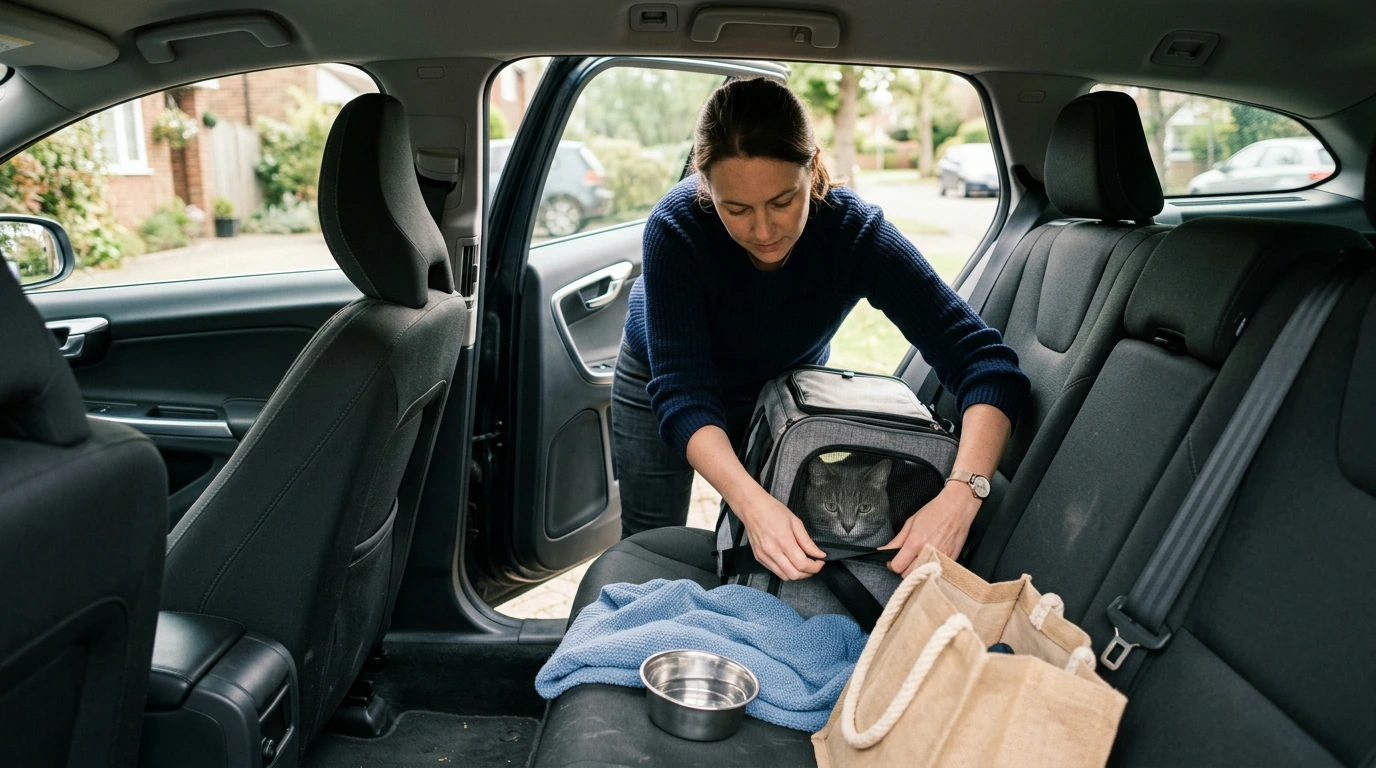
Attach the harness to the approved vehicle anchor point
3
Check the harness tension before the vehicle moves
4
Introduce the dog to the harness during the fit check
When the leash is slack, reward your dog. If it tightens, pause or change direction rather than continuing forward under tension. Resume and reward when your dog returns to a comfortable walking position. Keep early sessions short and move to busier routes gradually.
Before each outing, recheck the fit and leash connection. Reflective straps can make your dog more noticeable when light reaches them, but they do not produce light. For low-light walks, choose a well-lit route when possible, stay alert near traffic, and carry a light when needed.
There is no single piece of equipment that teaches a dog to walk beside you. The most useful habit is to reward your dog when the leash is slack. If the leash tightens, pause or change direction rather than continuing to move forward under tension. When your dog returns to a comfortable walking position, reward that choice and keep going. Consistency matters more than expecting one quick fix.
Begin somewhere quiet, where your dog has a better chance of noticing you. Bring small rewards, acknowledge check-ins, and practice for short stretches before trying busier routes. As your dog gets more comfortable, introduce distractions gradually. If an area is too exciting for either of you to practice calmly, it is fine to return to an easier setting and build from there.
A no-pull harness is a walking aid, not a substitute for patient, reward-based training. It may help you handle walks while you teach the behavior you want, but your timing and steady practice are what help your dog learn. For more loose-leash training guidance, see the American Kennel Club’s guide to walking on a loose leash.
A simple routine can make leaving home less rushed. Before each walk, check that the harness still sits comfortably, attach the leash securely, and bring a few small rewards for slack-leash moments. Pay attention during the walk, too: a fit that seemed right at the door deserves another look if your dog’s gait changes or the harness starts to shift.
For dusk or early-morning outings, remember that reflective straps help when a source of light reaches them. Choose well-lit routes when you can, stay attentive near traffic, and carry a light if conditions call for one. Visibility features support your precautions; they do not replace them.
If your dog tends to burst out the door with energy to spare, try a short enrichment activity before clipping on the leash. A few minutes of an appropriate game or simple training practice may give your dog something engaging to do before the walk begins. Our Brain Boost Fun for Dogs printable checklist is an optional source of activity ideas. Keep the activity brief enough that you still have time and patience for loose-leash practice outside.
Our aim is a walk you can repeat comfortably: a secure fit, a plan for visibility, and clear rewards when your dog walks with a relaxed leash. Make adjustments when something is not working, and give both of you room to improve over time.
Compare the Adjustable Dog Collar and Puppy Harness Set with the featured restraint for this restraint decision, checking fit, materials, and included hardware against the same car or use case.
Consistently reward your dog for walking with a slack leash. Pause when it tightens, then reward your dog for returning to a comfortable walking position.
The best choice is a secure leash that is comfortable for you to hold and lets you practice calmly with your dog. A leash alone will not stop pulling; consistent loose-leash training matters.
Some trainers are concerned about poor fit, restricted movement, or relying on equipment instead of training. Whether a harness is appropriate depends on the individual dog, its fit, and how it is used.









Leave a comment