50% off on product page · save $12.99
How to Reward Good Puppy Behavior: A Simple Routine
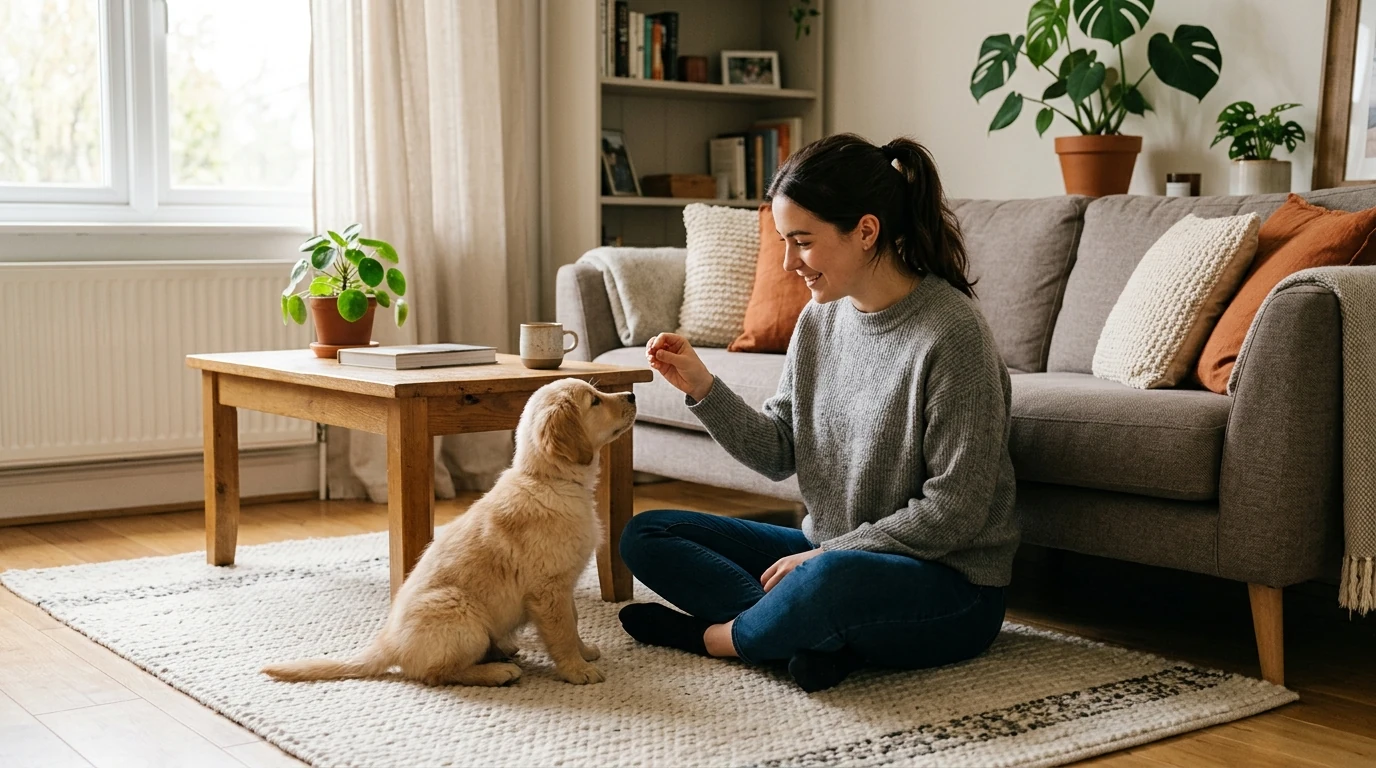
Positive reinforcement means adding something your puppy likes immediately after a behavior you want to see again. Suppose your puppy sits as a visitor approaches. Say “yes” just as their bottom touches the floor, then give a reward. That cheerful marker tells your puppy precisely which choice earned it; the treat or other reward follows.
Look for small successes, too. Your puppy might glance toward you when called, keep four paws on the floor for a second, or settle briefly on a mat. Marking and rewarding those moments gives your puppy more chances to practice the right choice before excitement takes over.
A treat can also help lure a puppy into a new movement. That can be useful at first, but it’s different from rewarding a behavior after it happens. As your puppy learns, aim to give the cue without showing food first, then reward the response.
An everyday puppy reward plan
| Situation | Behavior to notice | Reward idea |
|---|---|---|
| Greeting a visitor | Four paws stay on the floor | Mark the moment, then offer a small treat or calm praise |
| Practicing recall indoors | Your puppy turns and comes toward you | Mark promptly, then reward with a treat or brief play |
| A quiet moment at home | Your puppy settles on their mat | Place a treat on the mat so they can remain relaxed |
Small, puppy-appropriate treats, a favorite toy, brief play, and praise can all have a place. What works depends on your puppy and the setting. Kibble may be enough in a quiet room; distractions may call for a more appealing reward.
Watch your puppy’s response rather than assuming praise alone will motivate them. You can pair cheerful words with something they already enjoy and see whether those words become meaningful over time.
Keep food rewards tiny and count them toward your puppy’s daily intake. Treats should generally provide no more than about 10% of daily calories. If you have questions about portions, growth, or health, ask your veterinarian.
Featured in this guide
Treats, Praise, Repeat: Your Puppy Reward Guide | How to Reward Good Puppy Behavior | Positive Reinforcement Training for Puppies (Digital Download Guide)
Have rewards ready, then wait for or cue one behavior. Mark it as it happens, reward promptly, and pause before trying again. Short practice sessions can give you useful repetitions without pushing past your puppy’s focus.
Begin somewhere familiar with few distractions. If your puppy struggles, ask for a smaller step, move farther from the activity, or take a break. Our team recommends agreeing with everyone at home on the cue, the behavior that counts, and when to reward it.
A treat can help lure a new movement at first, but try not to make seeing food a requirement. As your puppy learns, give the cue without showing the treat, then reward the response.
Reward generously while a behavior is new. Once your puppy responds reliably in a familiar place, gradually vary the reward: food sometimes, play or another enjoyable activity at other times. Reducing treats does not mean you stop acknowledging good choices.
Expect to make the task easier when the setting changes. Sitting in your kitchen and sitting beside a busy sidewalk are different challenges for your puppy. Practice at a manageable distance and use a reward that matters to them there.
If you’d like ideas for play between sessions, our Brain Boost Fun for Dogs printable checklist is an optional companion to your reward routine.
It usually refers to the 10% guideline, not a limit of ten treats: treats should generally account for no more than about 10% of a dog’s daily calories. Your veterinarian can advise you on your puppy’s individual needs.
There isn’t one hardest behavior for every dog. A task becomes more difficult when distractions, excitement, or the environment make it harder for your puppy to focus, so start with an easier version and build gradually.
When a desirable consequence follows a behavior and makes that behavior more likely, it’s called positive reinforcement. In puppy training, food is one possible reward, alongside play and other things your puppy enjoys.





Leave a comment