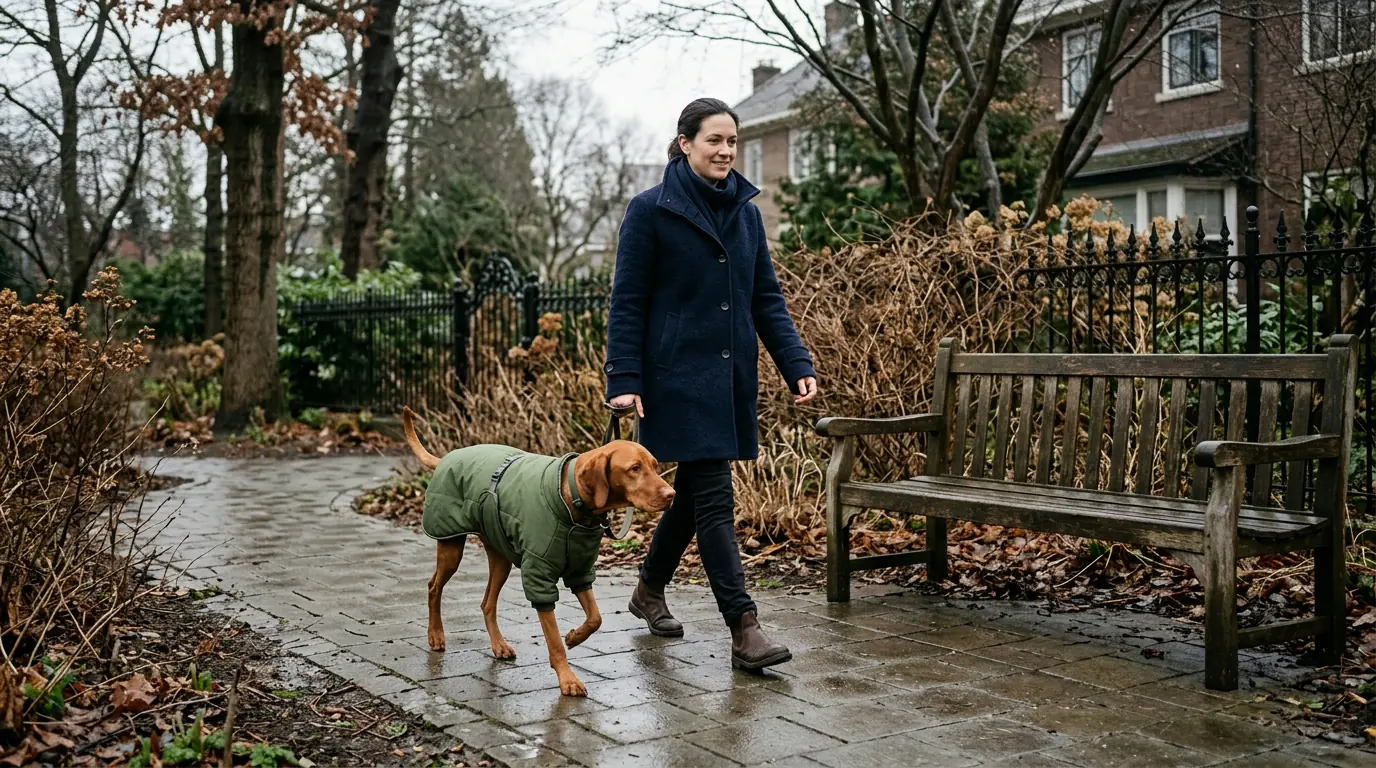
47% off on product page · save $21.98
Four-Legged Winter Pet Coats: When and How to Use One
Temperature alone cannot answer that question. Size, natural coat, age, health, wind, and moisture all affect how a pet handles a walk. Small dogs, dogs with short or thin coats, puppies, and seniors may need more protection than a healthy, thick-coated dog. Even within those groups, individual comfort varies. If your pet has a medical condition, ask your veterinarian for advice about cold-weather outings.
Watch your pet instead of relying only on the forecast. Shivering, reluctance to keep walking, or attempts to find shelter are signs to head inside and help them warm up. A jacket is one part of winter care, not a reason to stay out after your pet has had enough. The American Veterinary Medical Association’s cold-weather safety guidance is a useful reference when planning for colder conditions.
Quick winter-walk coat check
| Consideration | What to look for | Practical response |
|---|---|---|
| Your pet | Size, coat type, age, and health | Decide whether extra coverage may help. |
| The weather | Cold, wind, rain, or wet snow | Keep the outing appropriate to the conditions. |
| Your pet’s behavior | Shivering or wanting to head home | Go inside and help your pet warm up. |
| The fit | Easy movement without rubbing | Adjust the coat or choose another size before walking. |
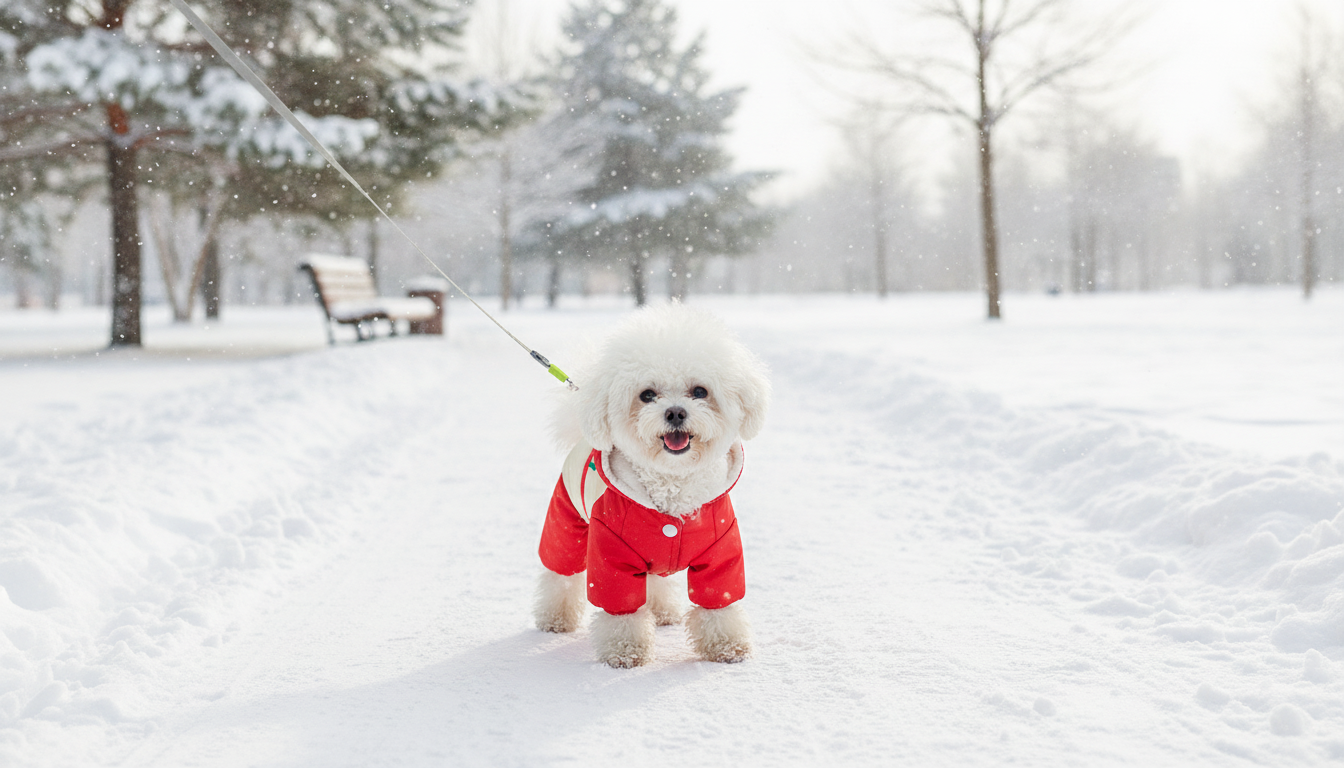
A back-covering coat leaves the legs open. Our warm, waterproof four-legged jacket adds coverage around all four legs and has a drawstring. That may suit a chilly, damp outing, but more coverage creates more points where fit can go wrong.
Watch for pulling at the shoulders or hips and bunching around the leg openings. Your pet should be able to walk, turn, and pause normally. A coat does not make prolonged exposure to cold or heavy rain safe; your pet’s comfort still sets the limit.

Featured in this guide
Winter Pet Coat Warm Waterproof Four-Legged Jacket with Drawstring
Measure your pet and use the available sizing guidance rather than choosing by breed alone. Pay attention to the chest and body fit, plus the position of all four leg openings.
Begin with a brief indoor try-on. Set the drawstring so it does not press into your pet or allow the jacket to shift. Watch your pet take a few steps and turn. Check that the legs move freely, the coat does not interfere with toileting, and no opening rubs.
If that goes well, keep the first outing short and supervised. Remove the coat and reassess if your pet freezes, struggles to move, or appears distressed. Check the fit again after a few minutes: a jacket can shift once your pet starts walking.
Check your pet’s paws, dry any wet fur, and remove a damp coat rather than leaving it against them. Let the jacket dry before its next use, and note any spots that rubbed so you can adjust the fit.
If outdoor time needs to be brief, our Brain Boost Fun for Dogs printable checklist offers ideas for indoor mental-stimulation games.
Before choosing, compare the product details with your daily routine, available space, care needs, and preferred setup. The strongest option is usually the one that fits the intended use clearly and remains simple to clean, store, and check before repeat use.
It is also worth checking measurements, material notes, included parts, and compatibility details so the item matches the way it will be used after delivery.
Before choosing, compare the product details with your daily routine, available space, care needs, and preferred setup. The strongest option is usually the one that fits the intended use clearly and remains simple to clean, store, and check before repeat use.
No breed list works for every dog. Small dogs and short-haired dogs may benefit from a coat, but age, health, and individual cold tolerance matter too.
A dog’s natural coat can change seasonally, with some dogs growing a denser coat for winter and shedding it as warmer weather arrives. How much it changes depends on the individual dog.
Cats can grow seasonal fur coats, but an outdoor garment is not automatically suitable for every cat. Prioritize shelter, and ask a veterinarian for advice if your cat appears cold or vulnerable.










Leave a comment