50% off on product page · save $18.99
How to Bring a New Puppy Home Safely by Car
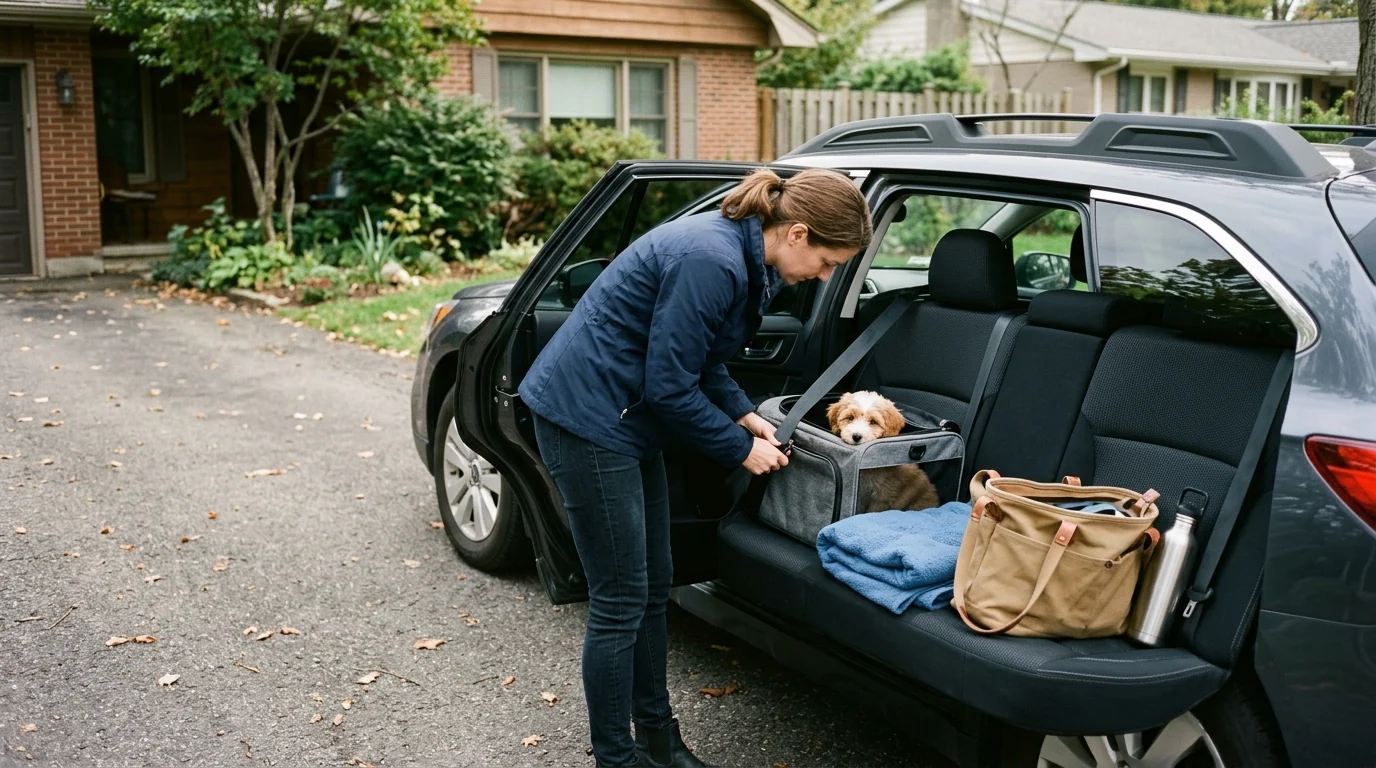
The safest option is a well-ventilated puppy crate or crash-tested pet carrier secured on the rear seat according to the manufacturer’s instructions. Confirm that the carrier is compatible with your vehicle’s seat belt or anchor system, and review this complete guide to bringing a new puppy home in the car before departure.

Choose a carrier large enough for the puppy to stand, turn around, and lie down without sliding across excess space. Line the base with an absorbent puppy pad, then add a washable towel or fleece layer that can be removed quickly after an accident.
Featured in this guide
Happy Pets, Confident Newly Owners | eBook for New Pet Parents | Tips for New Pet Owners, Pet Care Guide, Home Setup & Training Essentials
Place the secured carrier on the rear seat, away from active front airbags and direct sunlight. Thread the seat belt through the designated guides or use compatible vehicle anchors, then push the carrier firmly to confirm that it cannot tip or shift during braking.
Ask another adult to sit near the puppy and speak quietly without opening the carrier while the vehicle is moving. Keep music low, maintain a comfortable cabin temperature of approximately 68–72°F, and avoid giving a large meal during the two to three hours before travel to reduce nausea.
For a longer journey, schedule a break approximately every 60–90 minutes, depending on the puppy’s age and needs. Use a secure harness and leash before opening the car door, and choose a low-traffic potty area that is less likely to be contaminated by unknown dogs, especially if the puppy is not fully vaccinated.
At home, carry or guide the puppy directly to the designated potty spot before introducing one quiet room. Keep doors, gates, medications, electrical cords, and household cleaners secured so the first exploration is controlled and safe.
When bringing a puppy home, do not let the puppy ride loose, sit on a passenger’s lap, or occupy the front seat near an airbag. Avoid crowded public stops, sudden introductions to multiple people or pets, large pre-trip meals, and leaving the puppy unattended in the vehicle.
The 3-3-3 rule for puppies describes a general adjustment timeline: roughly three days to decompress, three weeks to learn the household routine, and three months to feel settled. It is a guideline rather than a deadline, so maintain consistent meals, potty breaks, sleep periods, and gentle training while the puppy adapts.








Leave a comment