5 Easy Brain Games for Dogs and a Printable Checklist
Walks and active play give dogs opportunities to move. Brain games add chances to sniff, search, make choices, and learn—behaviors many dogs enjoy using every day. A short treat search after a walk, for example, can offer a different kind of activity without requiring much equipment or space.
Choose challenges that fit your dog’s age, confidence, mobility, and interests. A dog who loves sniffing may prefer searching for food to practicing tricks; a dog with limited mobility may do better with a game that keeps rewards within easy reach. Games can be enjoyable additions to a routine, but they aren’t a promised fix for behavior problems or a replacement for exercise and rest.
Begin with a few pleasant minutes. If your dog walks away, stops trying, or seems frustrated, make the next attempt easier—or call it a day. For more guidance on teaching skills at a comfortable pace, explore the American Kennel Club’s dog training resources.
Check the listed dimensions for why mental stimulation belongs in your dog’s routine against the available vehicle space before use.
Featured in this guide
Brain Boost Fun for Dogs | Printable Checklist for Mental Stimulation Games for Dogs | DIY Dog Enrichment Activities & Training Ideas for Smarter Playtime
Place a few small treats where your dog can see them and say “find it.” Once they understand the game, put treats just out of sight, such as beside a chair leg. To make it easier, return to visible treats; to make it harder, use several safe hiding spots in one room.
Place a few small treats where your dog can see them and say “find it.” Once they understand, tuck treats just out of sight, perhaps beside a chair leg. Return to visible treats whenever the search becomes too difficult.
Check the listed dimensions for 1. treat search against the available vehicle space before use.
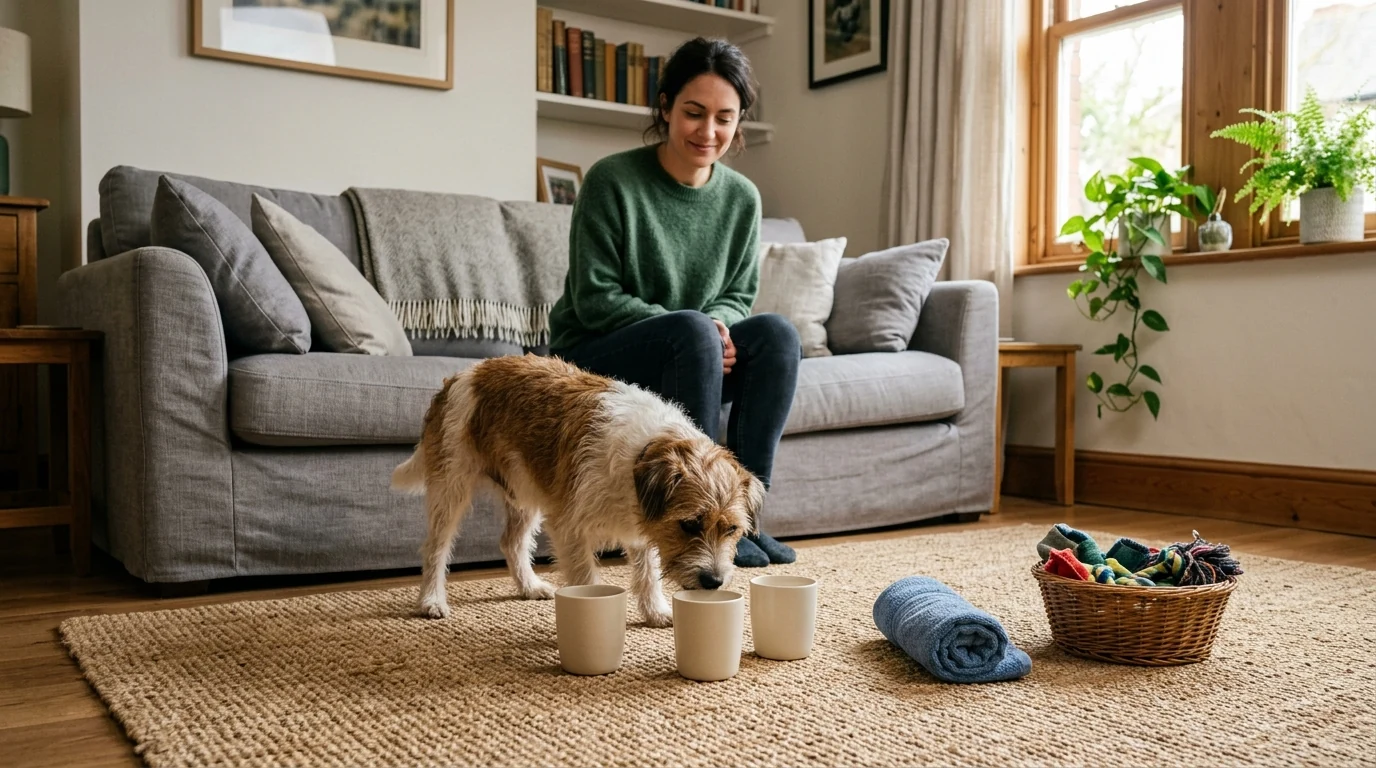
Scatter treats across a towel and fold it loosely. If your dog uncovers them comfortably, roll part of the towel next time. Stay nearby, and unfold it if the search turns frustrating or the towel becomes a chew item.
Hide a treat under one of two sturdy cups while your dog watches. Invite a nose touch or paw indication, then lift the cup. Leave its edge slightly raised at first; later, move the cups slowly. Avoid breakable cups or pieces your dog could bite off.
Check the listed dimensions for 3. cup finding against the available vehicle space before use.
Set out two familiar toys and say the name of one. Reward your dog for interacting with the named toy. Start with toys that look and feel different. As your dog gains confidence, vary their positions or try two more similar toys. Keep the mood playful rather than turning every choice into a test.
Choose a Game for Today
| Activity | What you need | Beginner-friendly starting point |
|---|---|---|
| Treat search | A few small treats | Place treats in plain sight before hiding them nearby |
| Towel roll | Towel and treats | Fold loosely so treats are easy to reach |
| Cup finding | Two sturdy cups and a treat | Let your dog watch where the treat goes |
| Trick practice | Treats and a familiar cue | Reward one small step toward a new behavior |
| Toy choice | Two familiar toys | Reward interaction with the named toy |
Offer two familiar toys, say the name of one, and reward your dog for interacting with it. Begin with toys that look and feel different. If your dog enjoys the game, vary their positions. Keep it playful, not a test.
Try a treat search one day, a supervised towel or cup game the next, and a short trick session followed by toy choice on another. Repeat favorites freely. The Brain Boost Fun for Dogs printable checklist offers a place to track games you’ve tried and activities you’d like to revisit. Even a brief, successful search counts as playtime.
Compare related options such as How to Travel with a Cat in the Car – A Complete eBook Guide for Stress-Free Road Trips with Your Feline Companion to match features, dimensions, and use case before choosing.
There is no single supplement that is best for every dog. Ask your veterinarian before giving your dog a supplement, especially if they have a medical condition or take medication.
No single food can guarantee better memory for a dog. Feed an appropriate, balanced diet, and ask your veterinarian about any concerns with your dog’s memory or behavior.
There’s no one best game for every dog. A simple treat search is an accessible starting point, while trick practice or cup finding may appeal to a dog ready for another challenge.







Leave a comment