50% off on product page · save $18.99
A Calmer Beginning for You and Your New Pet
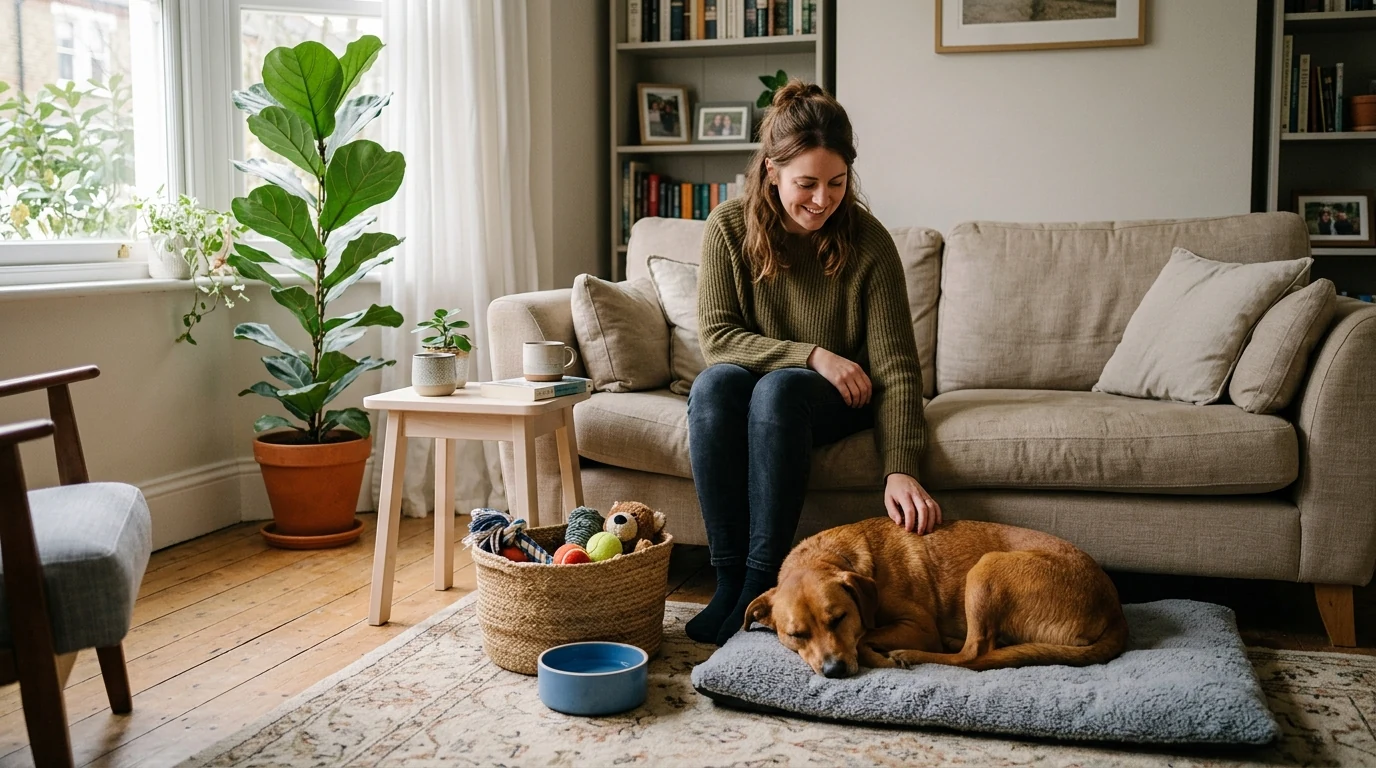
Start with a quiet spot away from visitors and busy household traffic. Add an appropriate bed or resting area and fresh water, then let your pet choose when to come out and explore. A retreat is especially useful when the household gets noisy. Make sure everyone knows not to disturb a pet that has gone there to rest.
Walk through your home at pet level. Put medications, cleaning products, cords, toxic plants, and small swallowable objects out of reach. Check that doors and windows close securely, and inspect fences or other outdoor boundaries before relying on them. The ASPCA’s general pet care resources offer a useful starting point for reviewing everyday needs and household risks.
Set up feeding, toileting, and sleeping areas before arrival so you are not making every decision while your pet is exploring. Cats need an accessible litter box and an appropriate scratching surface. Dogs need a planned potty area and safe access to it. Other species have their own housing, temperature, and enrichment requirements; check those needs before bringing them home.
Set up food, water, sleeping, and toileting areas before arrival. Cats need an accessible litter box and an appropriate scratching surface; dogs need a planned potty area and safe access to it. For other species, check their particular housing, temperature, and enrichment needs in advance.
| Area | Prepare |
|---|---|
| Rest | A comfortable, low-traffic space |
| Meals | Appropriate food, bowls, and fresh water |
| Safety | Stored hazards and secured exits |
| Toileting | A litter box or planned outdoor spot |
Featured in this guide
Happy Pets, Confident Newly Owners | eBook for New Pet Parents | Tips for New Pet Owners, Pet Care Guide, Home Setup & Training Essentials
A routine need not run by the minute. Keep meals, toileting, rest, and play reasonably consistent, then adjust for your pet’s age, species, and individual needs. Introduce rooms and people gradually, always leaving a way for your pet to step away.
If they hide, avoid interaction, or struggle to settle, pause and return to a familiar space. Arrange a veterinary visit to discuss nutrition, preventive care, identification, and any changes in appetite, energy, behavior, or toileting that concern you.
Begin training by rewarding a behavior you want to repeat: approaching calmly, using the right toileting area, or responding to a cue. Keep sessions brief. If your pet cannot focus, make the task easier or try later.
For dogs, early foundations can include responding to their name, coming when called in a safe space, and settling on a mat. Start with few distractions before gradually adding more. Avoid intimidating corrections; guide your dog toward an appropriate action and reward it.
Play should suit your pet’s abilities, with supervision around anything they might chew or swallow. Dog owners looking for activity ideas can keep the Brain Boost Fun for Dogs printable checklist alongside their regular care routine.
The Happy Pets, Confident Newly Owners eBook is listed for new pet parents interested in pet-care tips, home setup, and training essentials. The listing does not provide a detailed chapter breakdown, so review the current product details before purchasing.
A general guide cannot replace individualized advice. Speak with a veterinarian or qualified behavior professional about health concerns or behavior that worries you.
Check the listed dimensions for use a guide as a planning aid against the available vehicle space before use.
Before choosing, compare the product details with your daily routine, available space, care needs, and preferred setup. The strongest option is usually the one that fits the intended use clearly and remains simple to clean, store, and check before repeat use.
There is no universal 7 7 7 rule that predicts how every dog will adjust to a new home. Give your dog time, follow their behavior rather than a fixed timeline, and ask a qualified professional if you are concerned.
No cue is hardest for every dog. Reliable recall around distractions challenges many dogs because it takes gradual practice, worthwhile rewards, and careful management.







Leave a comment