61% off on product page · save $37.14
Cat Bowl Size for Preventing Whisker Fatigue
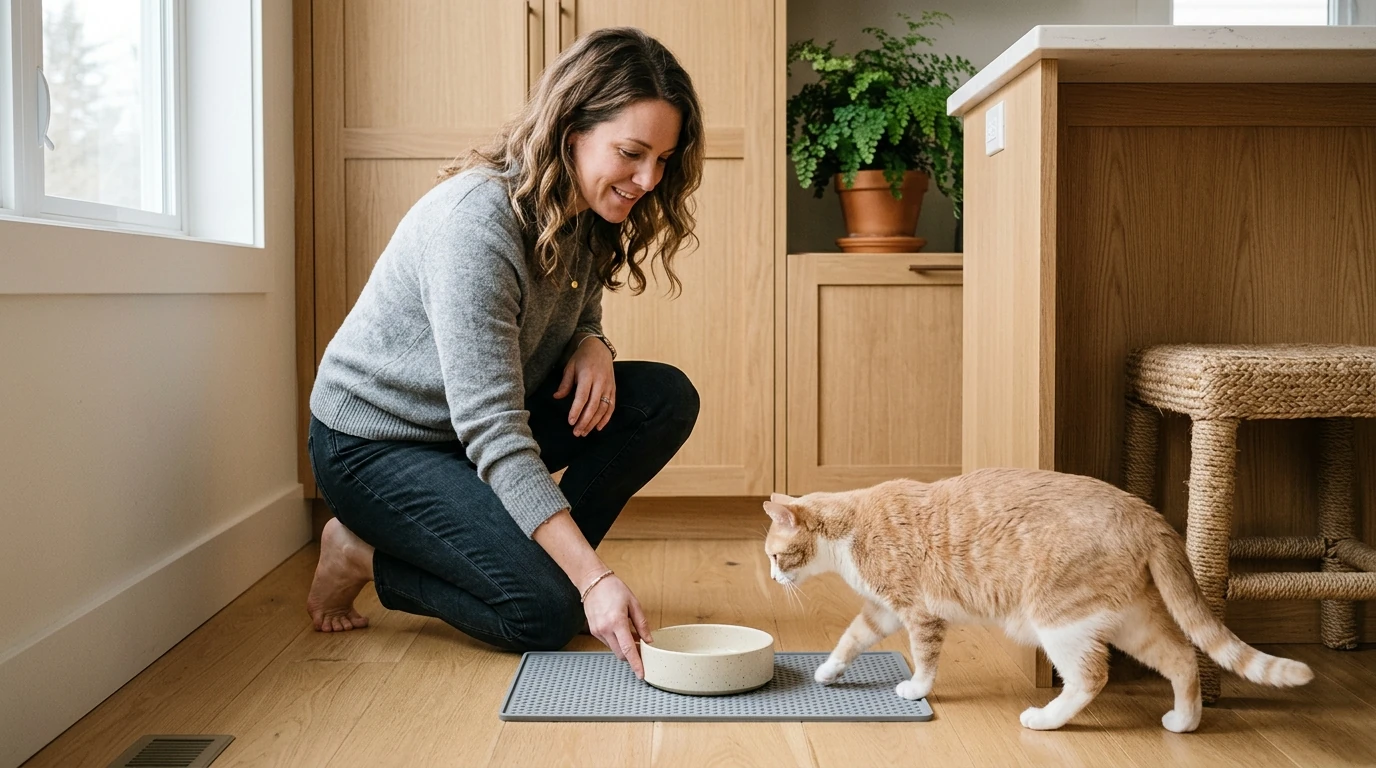
For most adult cats, a bowl should be at least 6 inches wide to reduce contact between the sides and the whiskers. Larger cats may be more comfortable with a 7- to 8-inch bowl, so compare the opening with the cat’s face and whisker span.

Look for a dish with a broad opening and a depth of about 1 to 2 inches. This shape allows a cat to reach food without pushing its face into narrow walls or deep corners.

Featured in this guide
Anti-Tip Ceramic Cat Bowl – Non-Slip, Anti-Vomiting Pet Feeder with Flower Design
Stainless steel, glazed ceramic, and glass are smooth, nonporous options that are easy to clean. Choose a bowl with a weighted base or nonslip bottom, and confirm that ceramic glazes are labeled food-safe and lead-free.
A shallow plate-style bowl works well for wet food, while dry food may need a slightly raised rim to contain kibble. Avoid steep-sided designs, and add only enough food to cover the center rather than filling the bowl to the edge.
Even a 6-inch bowl may feel restrictive to a large or long-whiskered cat. If your cat pulls food onto the floor, eats only from the center, or repeatedly pauses at the bowl, try a wider dish and review the complete cat bowl sizing guide.
Watch · product page video
“Love this bowl! It’s stable, doesn’t tip over and my cat can’t make a mess anymore. 🐱👍”
Amoriano product page · Product review
A bowl should generally be at least 6 inches wide to avoid whisker fatigue. A 7- to 8-inch opening may be better for large cats or cats with especially long whiskers.
Bowls that prevent whisker fatigue are wide, shallow, and free of steep interior walls. Plate-style stainless steel, glass, or food-safe ceramic dishes are practical choices.
Cat bowls should typically be 6 to 8 inches wide across the opening. The ideal width lets the cat eat without its whiskers repeatedly brushing the sides.
A cat bowl deeper than about 2 inches may be uncomfortable when it also has narrow or steep sides. Choose a depth of roughly 1 to 2 inches and make sure the food remains easy to reach.
A cat with whisker fatigue may paw food out, eat from the center only, hesitate near the bowl, or leave food around the edges. If these behaviors continue after changing bowls, consult a veterinarian to rule out dental pain, nausea, or another health problem.











Leave a comment