How to Give a Hamster a Happy Life: 5 Care Tips
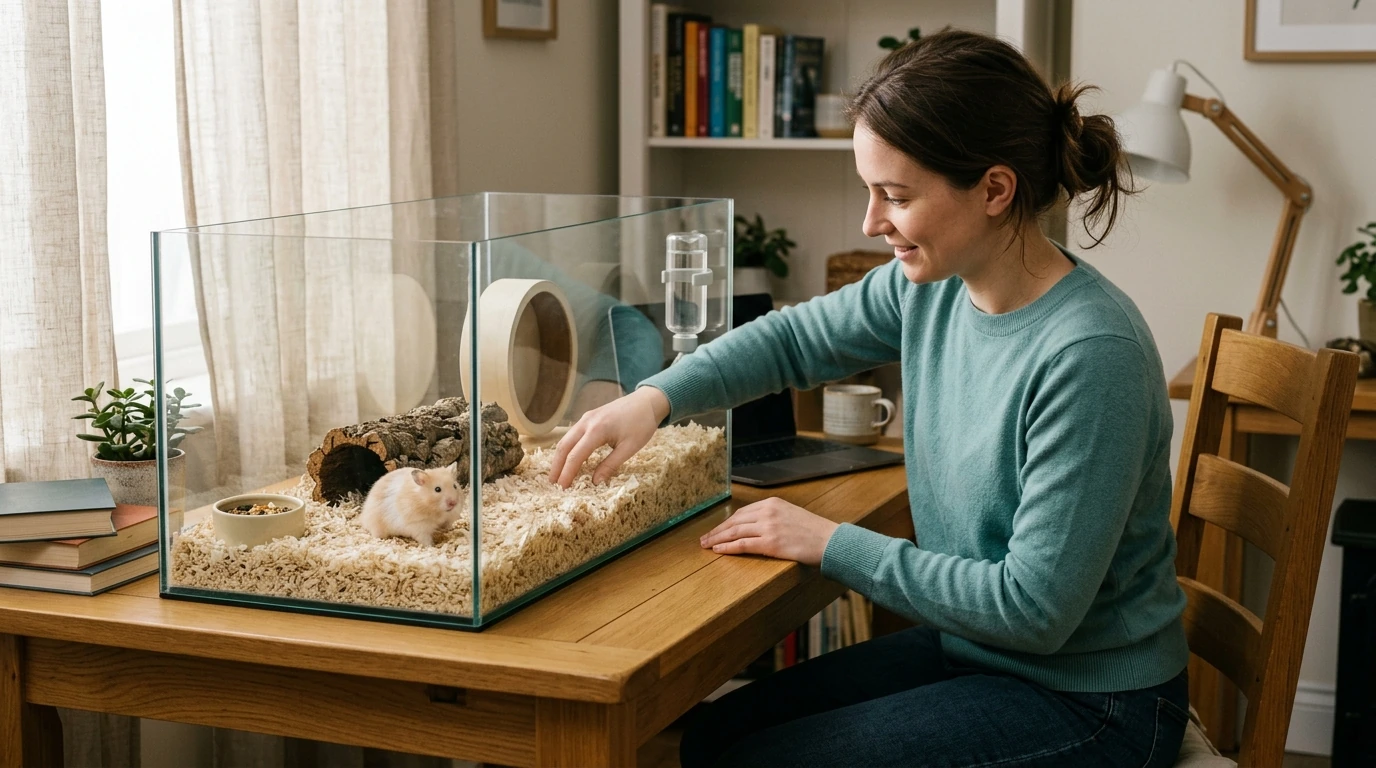
A happy hamster needs enough room to explore, dig, and create separate sleeping and food areas. Choose a secure, well-ventilated enclosure with a deep base, then add at least 6 inches of unscented paper bedding for burrowing. Avoid cedar, pine, and heavily scented materials, which can irritate a hamster’s respiratory system.

Install a solid-surface exercise wheel that lets your hamster run without arching its back. Add cardboard tunnels, wooden chew toys, hideouts, and safe branches, rotating a few items regularly to maintain interest. Scatter some of its daily food around the enclosure to encourage natural foraging.

Featured in this guide
Happy Hamster Feeding Routine Checklist | Printable Guide for Pet Owners | Digital Download on How Often Should I Feed a Hamster | Hamster Care Schedule & Nutrition Planner
Offer a quality hamster food formulated with grains, seeds, and appropriate protein, following the package’s serving guidance. Small portions of hamster-safe vegetables can add variety, while fresh water should always be available in a clean bottle or stable dish. Remove uneaten fresh food before it spoils.
Hamsters are generally most active during the evening and night, so avoid waking one for play. Keep the enclosure in a quiet location away from direct sunlight, drafts, loud speakers, and sudden temperature changes. Clean soiled spots regularly, but retain some clean nesting material during larger cleanings to preserve familiar scents.
Let a new hamster settle in before beginning short handling sessions. Offer a treat from your hand, allow the hamster to approach voluntarily, and hold it close to the floor or over a soft surface. Learn more practical care tips in the complete guide on how to give a hamster a happy life.
An unhappy hamster may repeatedly bite cage bars, pace, hide constantly, overgroom, or become unusually aggressive. Persistent changes in appetite, activity, or appearance can also indicate illness and should be discussed with a veterinarian.
You should not squeeze or tightly hug your hamster because its small body is delicate. Instead, cup the hamster gently in both hands and let it move freely.
Make a hamster feel loved by providing safety, enrichment, nutritious food, and patient interaction. Respecting its sleep schedule and boundaries helps it associate your presence with comfort.
Make your hamster happier by increasing bedding depth, adding suitable hiding places, and offering regular foraging activities. A correctly sized wheel and a calm environment also support physical and emotional well-being.
Taking care of a hamster at home is manageable, but it requires daily feeding, fresh water, spot cleaning, and health checks. Owners must also budget for a spacious enclosure, enrichment, bedding, food, and veterinary care.










Leave a comment